🌿 NCERT Solutions for Class 12 Chemistry Chapter – Organic Compounds Containing Nitrogen
🔍 Introduction
The chapter Organic Compounds Containing Nitrogen is a cornerstone in the study of organic chemistry at the Class 12 level. It introduces students to a broad class of nitrogen-containing compounds which are not only important for board exams but also serve as foundational concepts for future studies in pharmaceuticals, biochemistry, and chemical engineering.
Nitrogen, being a key element in life-sustaining biomolecules like amino acids, proteins, and nucleic acids, gives rise to a range of organic compounds that exhibit diverse structures, reactivities, and uses. The chapter primarily focuses on amines, diazonium salts, cyanides, isonitriles, and nitro compounds, each of which possesses distinct characteristics due to the presence of the nitrogen atom.
The NCERT textbook introduces these topics systematically by discussing:
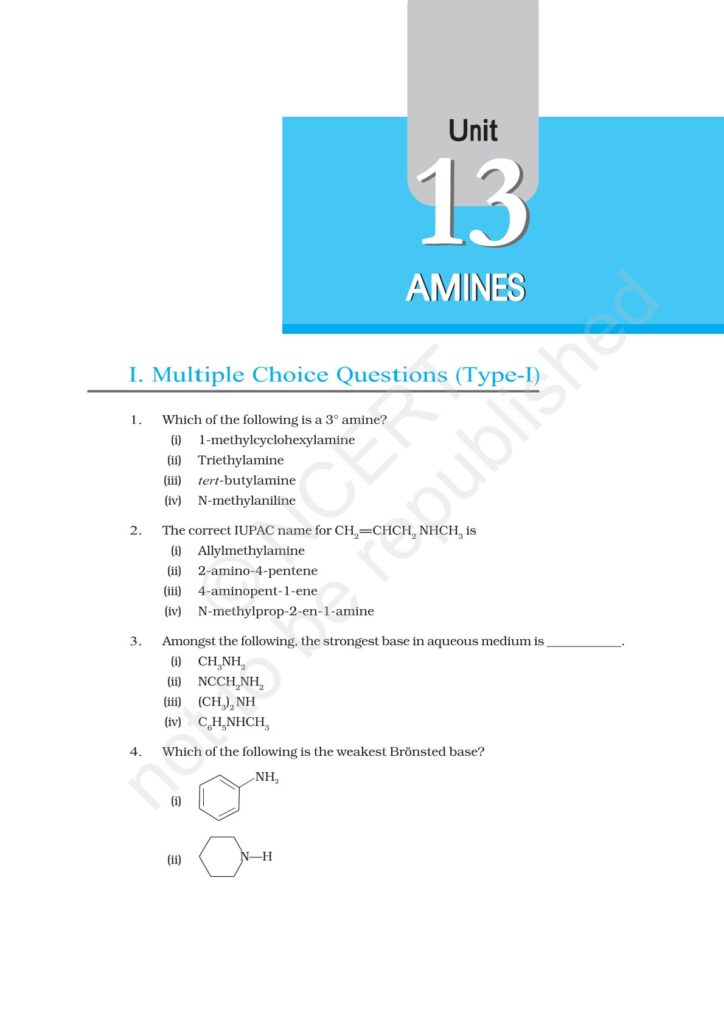
- Classification and nomenclature of amines – primary, secondary, and tertiary; aliphatic vs aromatic
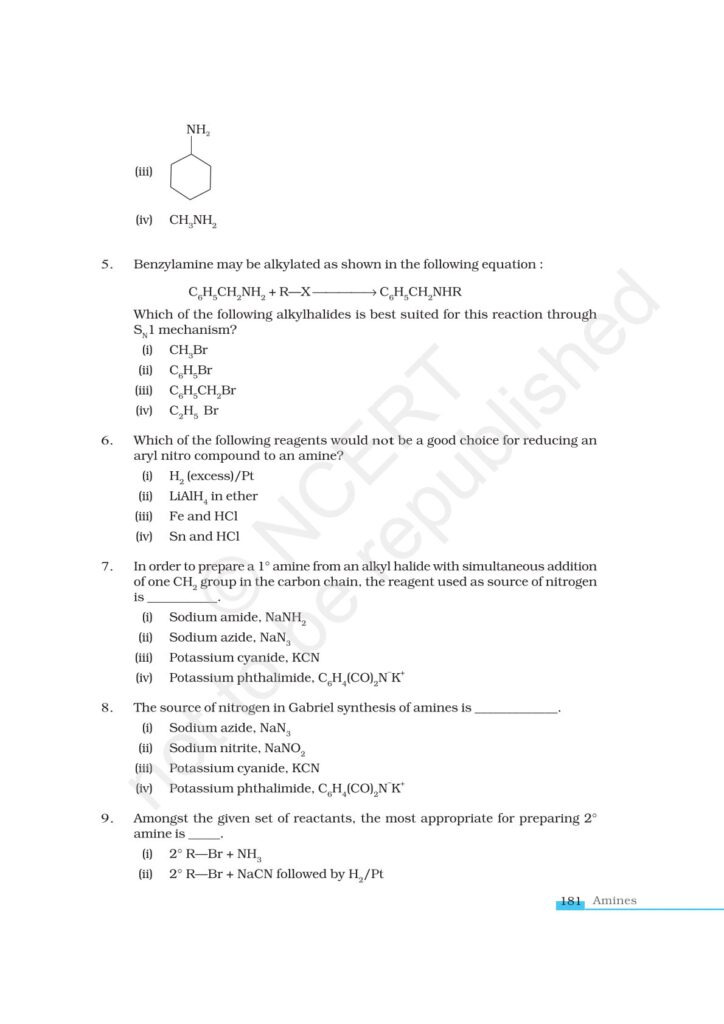
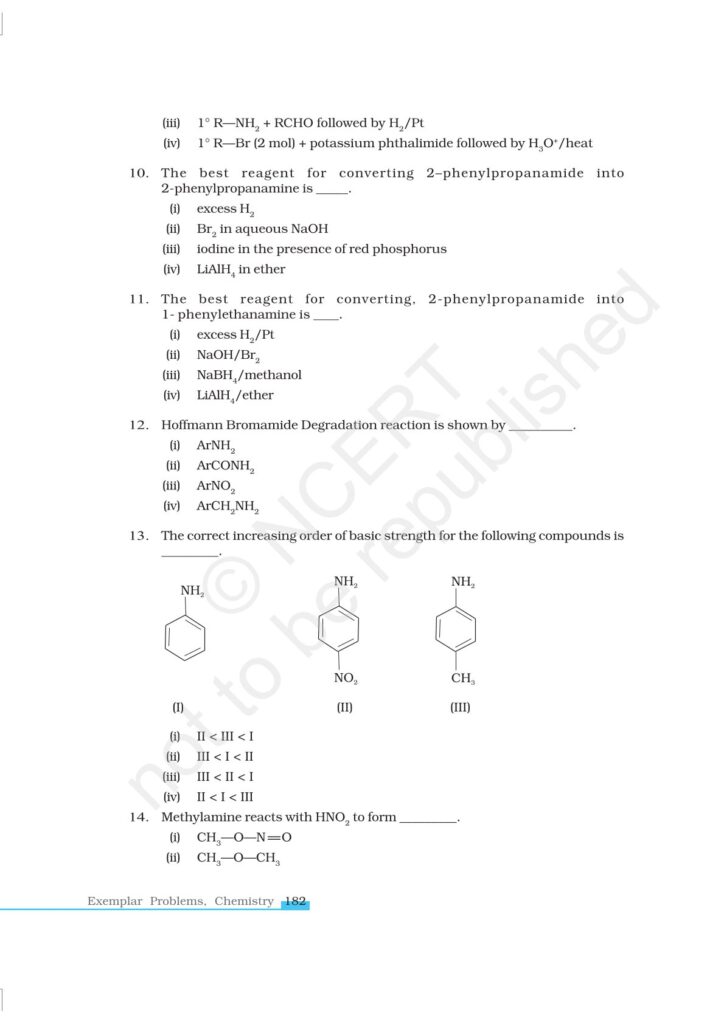
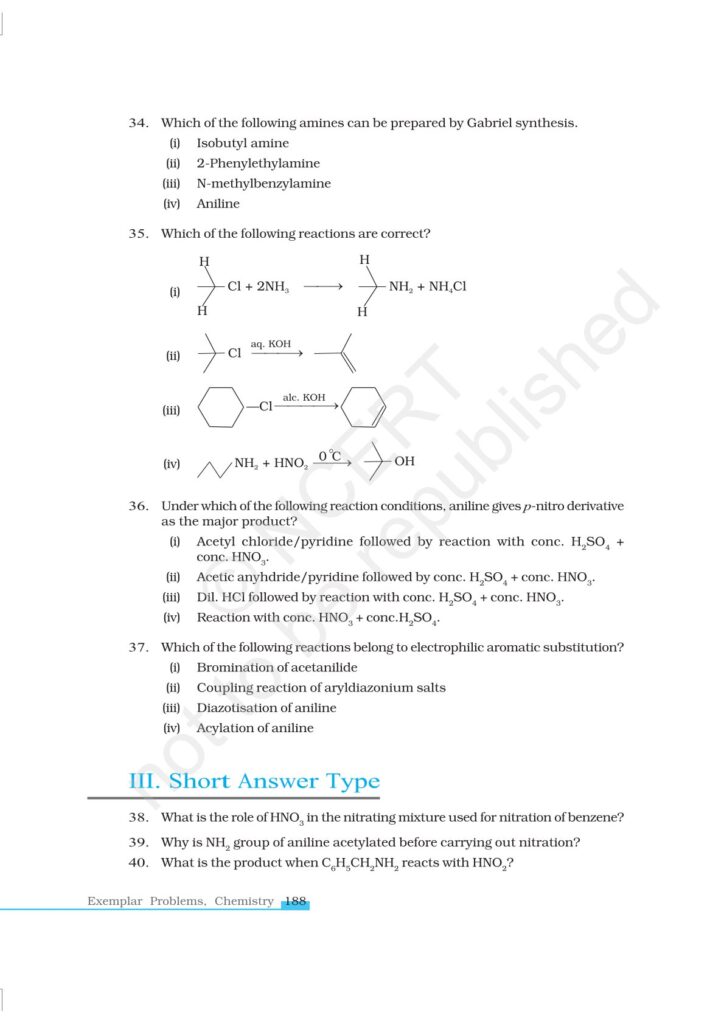
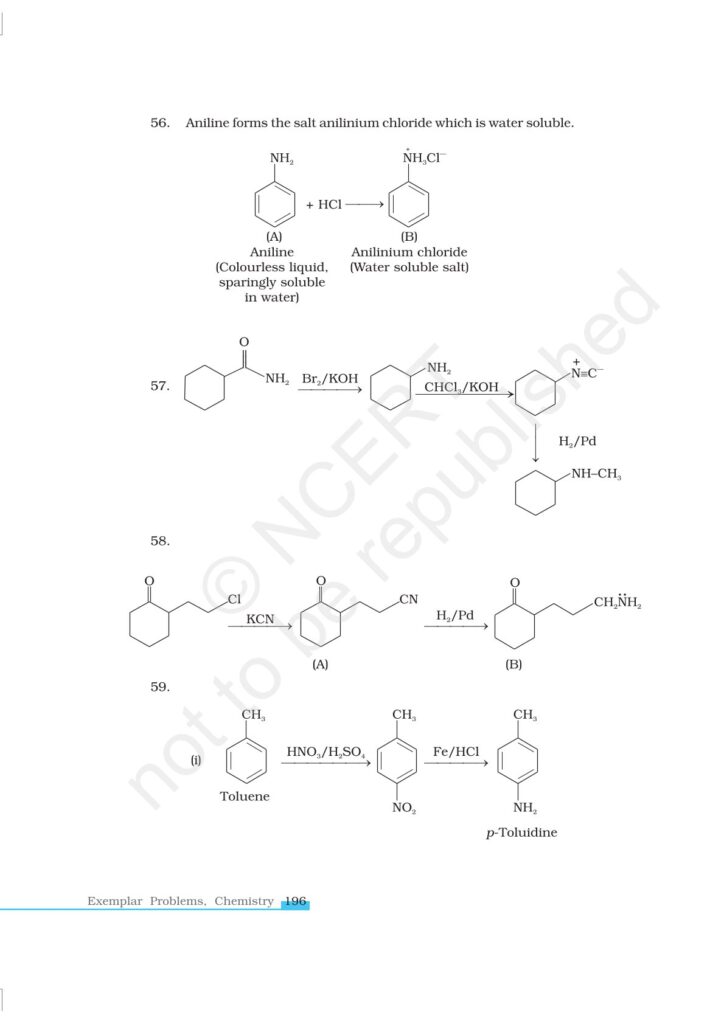
- Methods of preparation – including reduction of nitro compounds, amides, nitriles, Gabriel phthalimide synthesis, and Hoffmann degradation
- Physical and chemical properties – solubility, boiling points, basicity, acylation, alkylation, and electrophilic substitution in aromatic amines
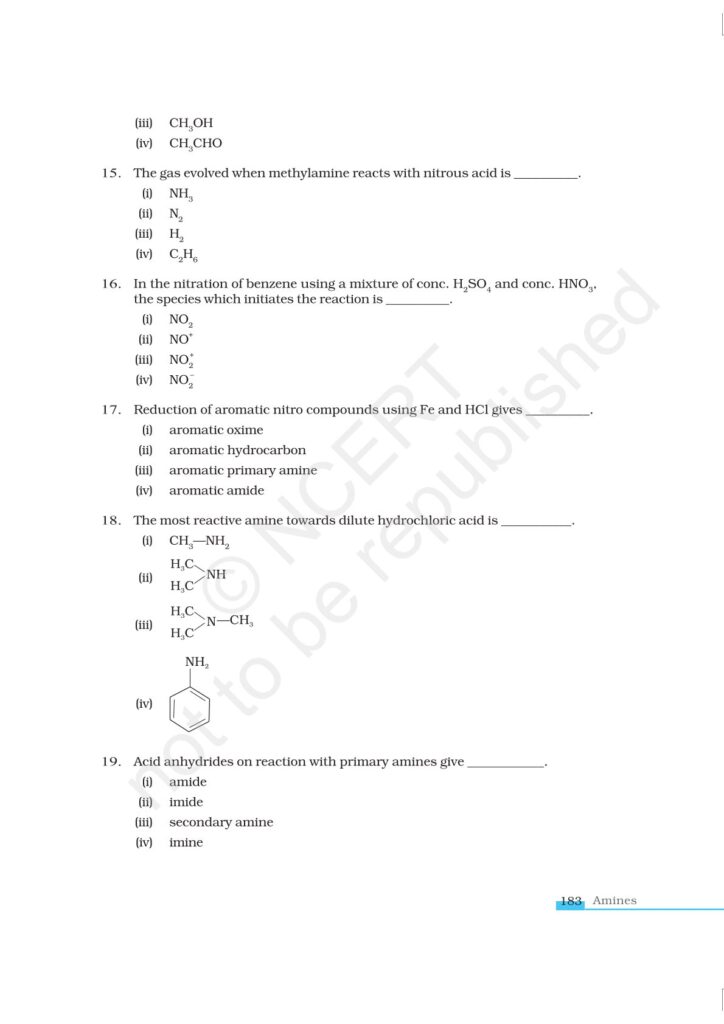
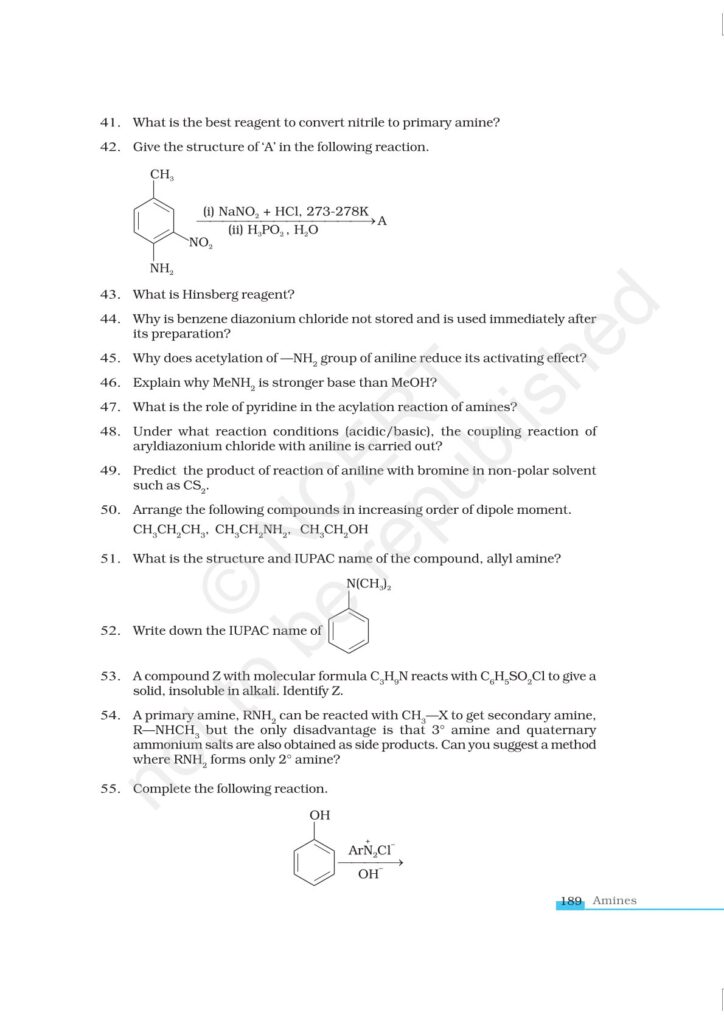
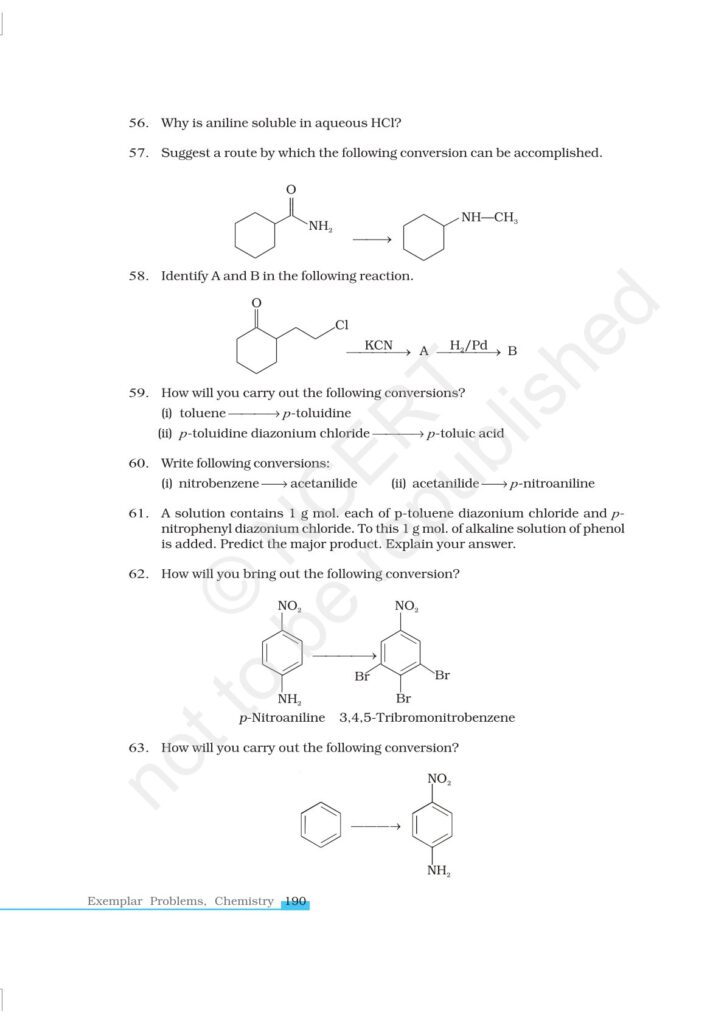
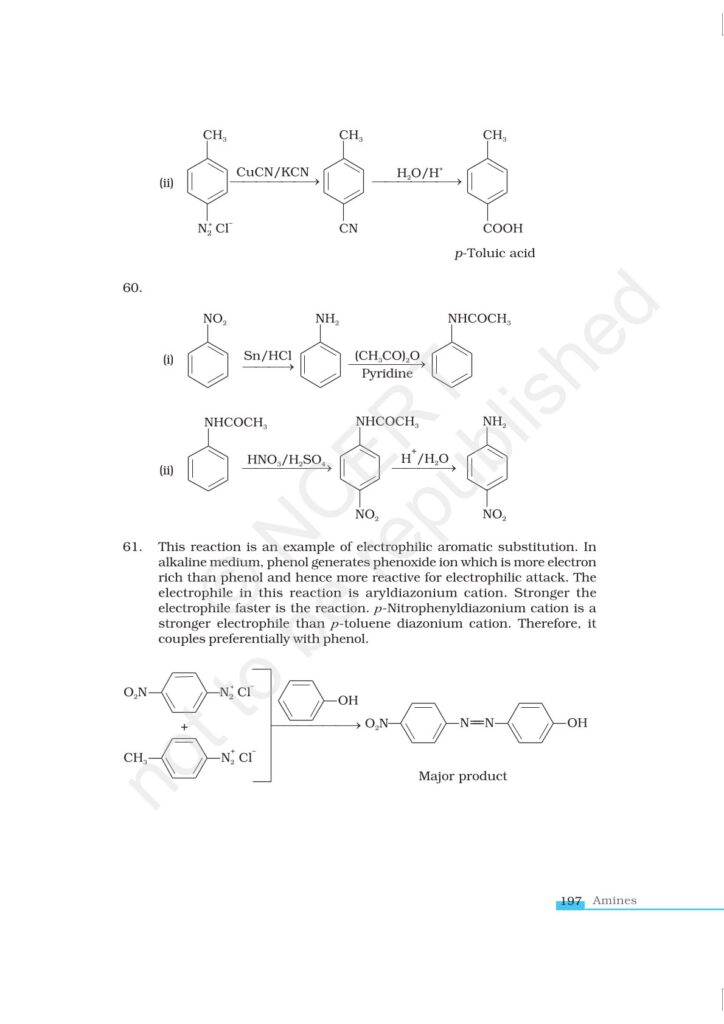
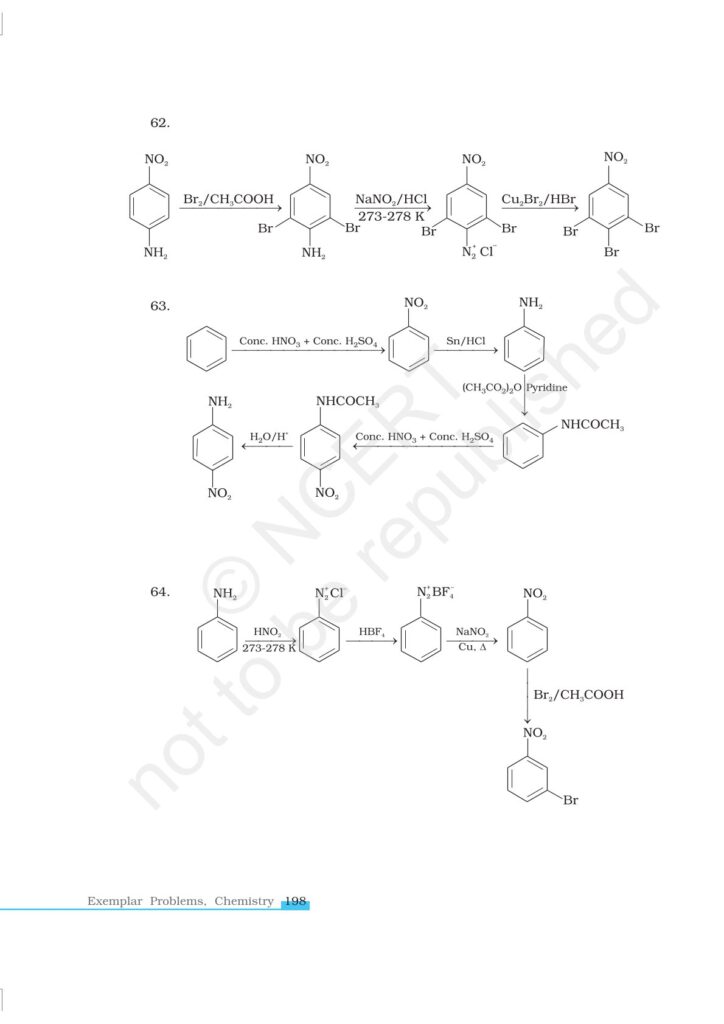
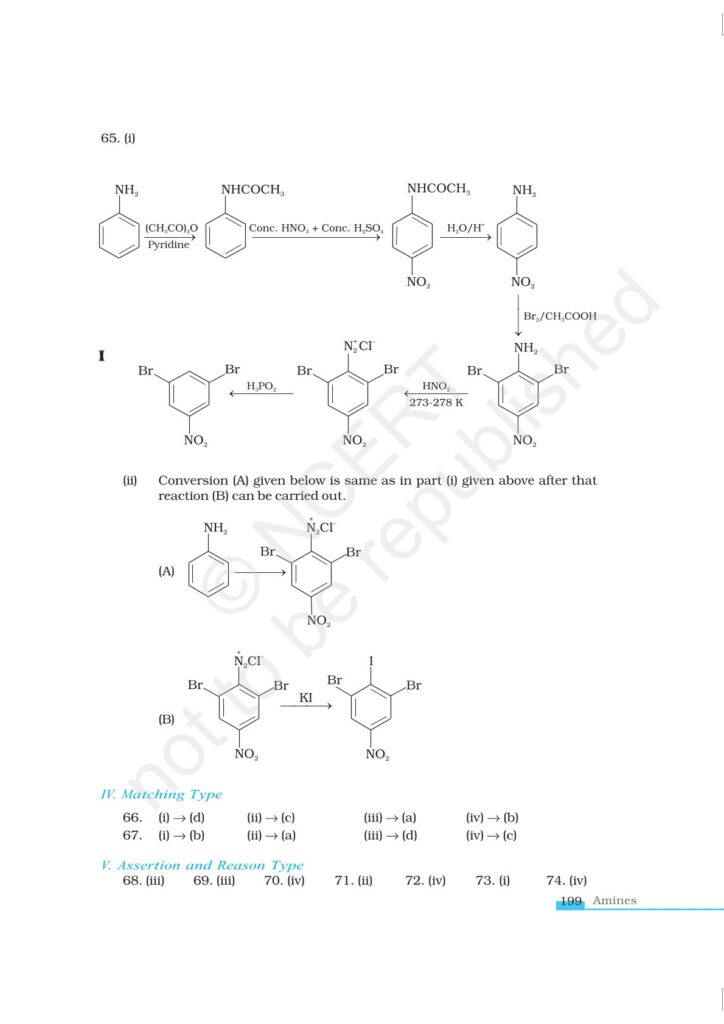
- Diazonium salts – their preparation via diazotization and their synthetic applications, especially in dye chemistry
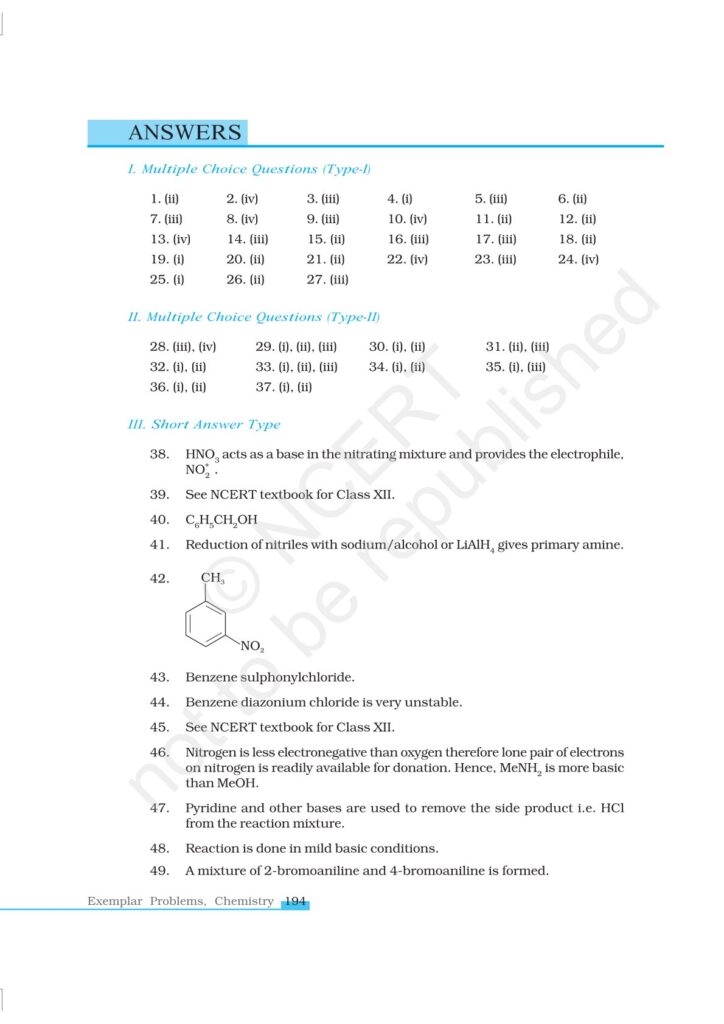
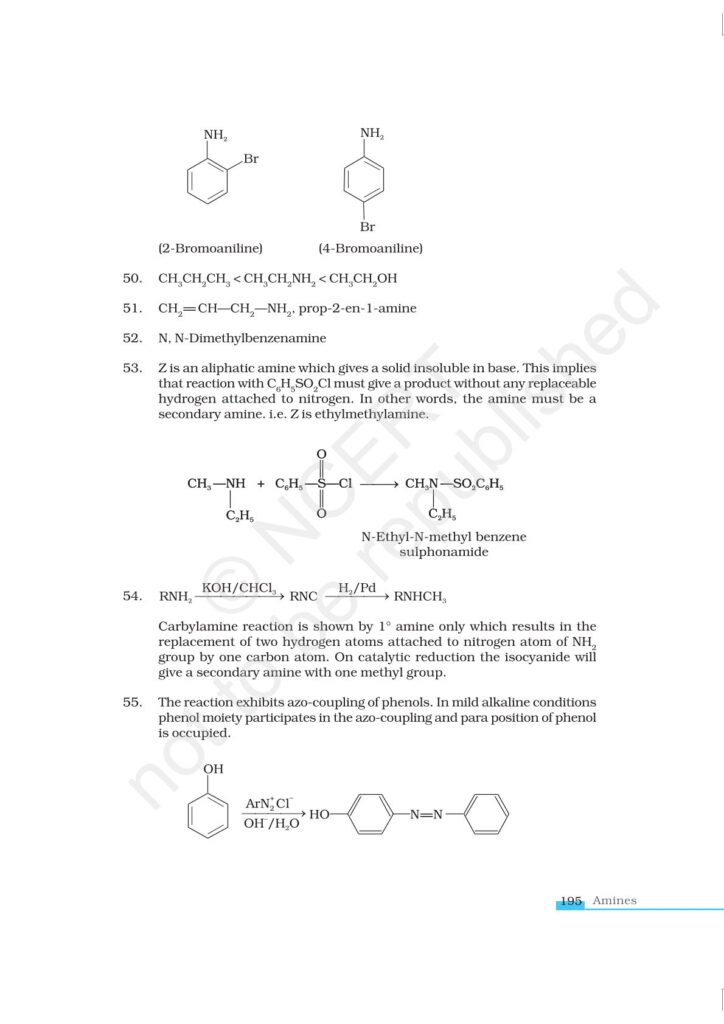
But while the textbook covers the core concepts, it is through NCERT Solutions that students develop clarity in problem-solving, analytical thinking, and exam-readiness. These solutions help break down complex reaction mechanisms, offer precise explanations, and reinforce theoretical concepts through well-structured answers.
🧠 Why Are These Solutions Important?
- ✅ They follow the NCERT framework precisely, helping students stay aligned with CBSE curriculum and marking schemes.
- ✅ Concepts like electronic effects, resonance, and nucleophilic substitution reactions are explained in simplified yet detailed steps.
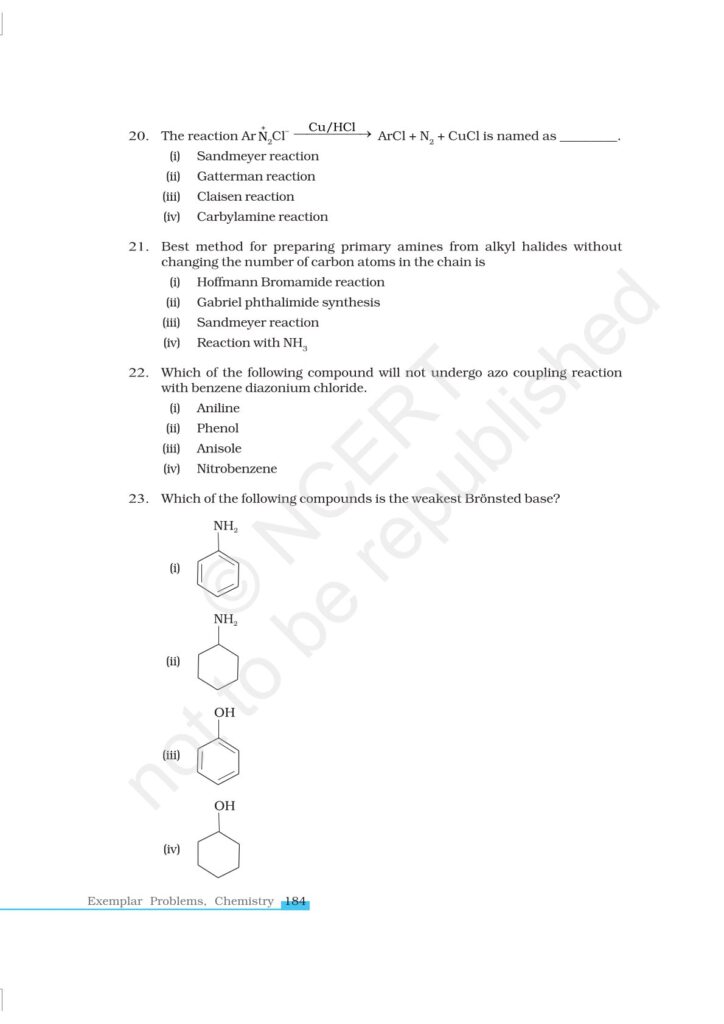
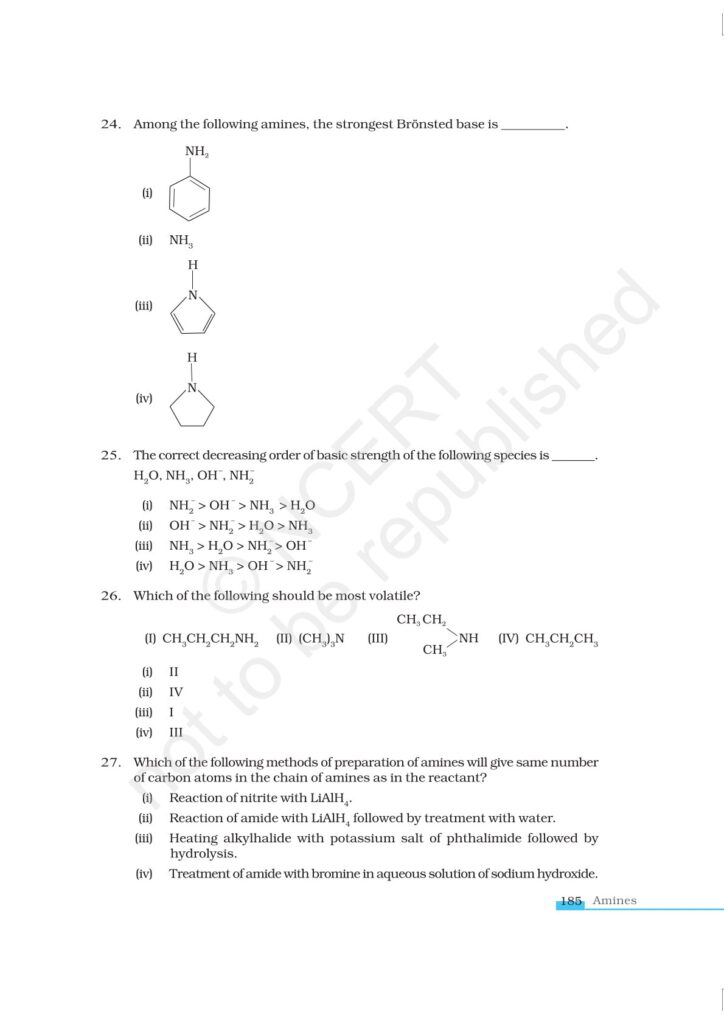
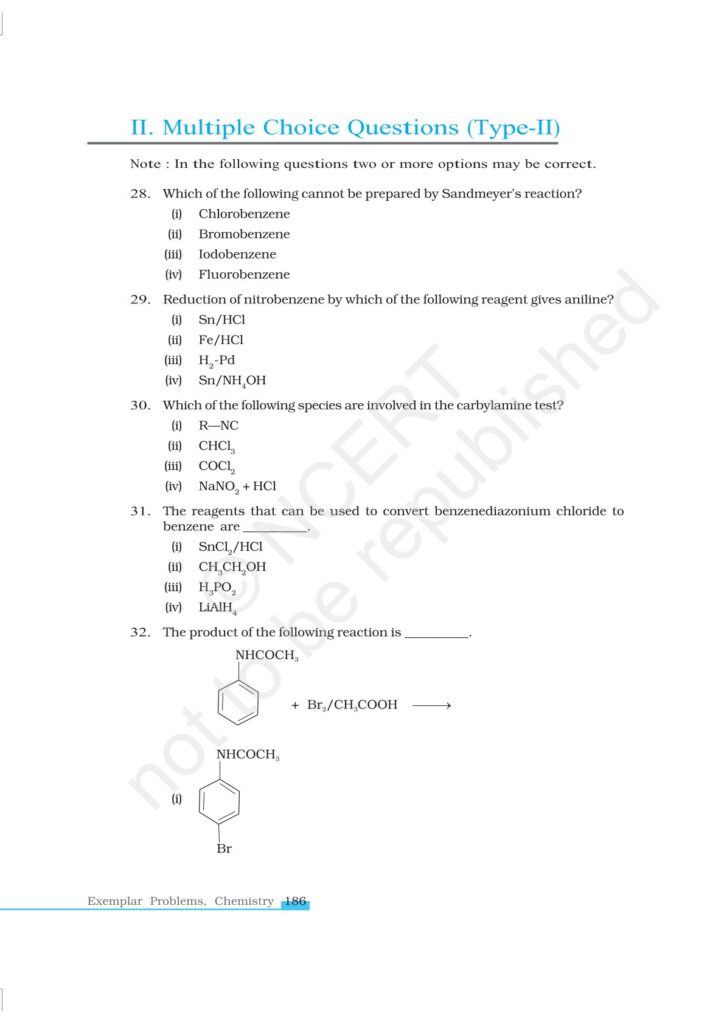
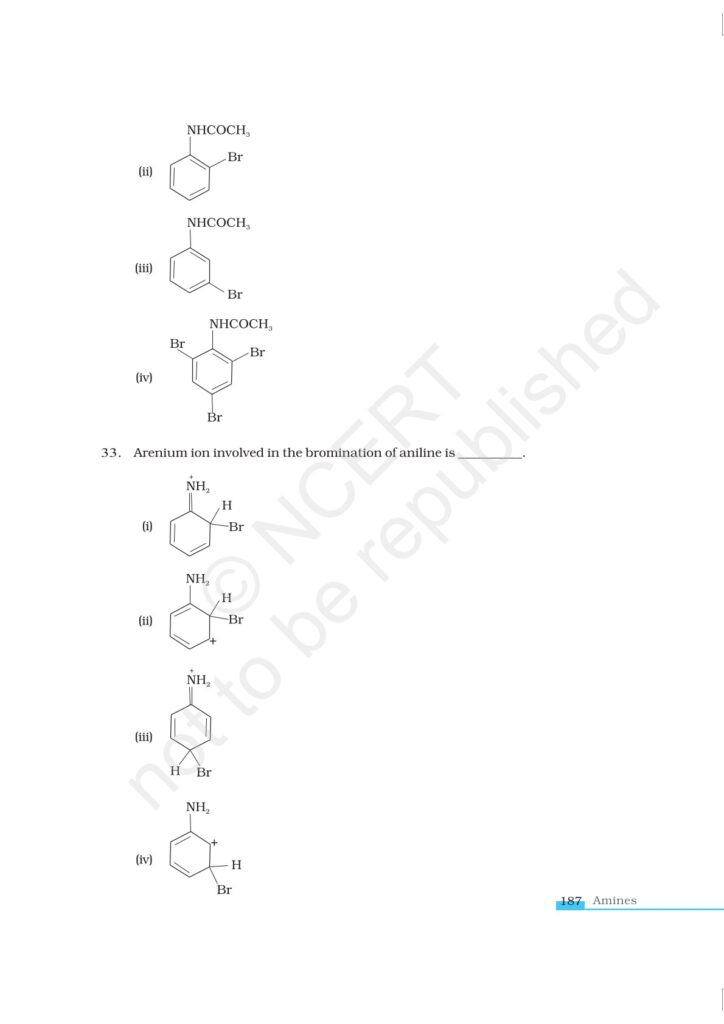
- ✅ Students often struggle with basic strength comparisons, reaction mechanisms, and diazonium coupling reactions. These solutions offer a clear path to understand and memorize such tricky areas.
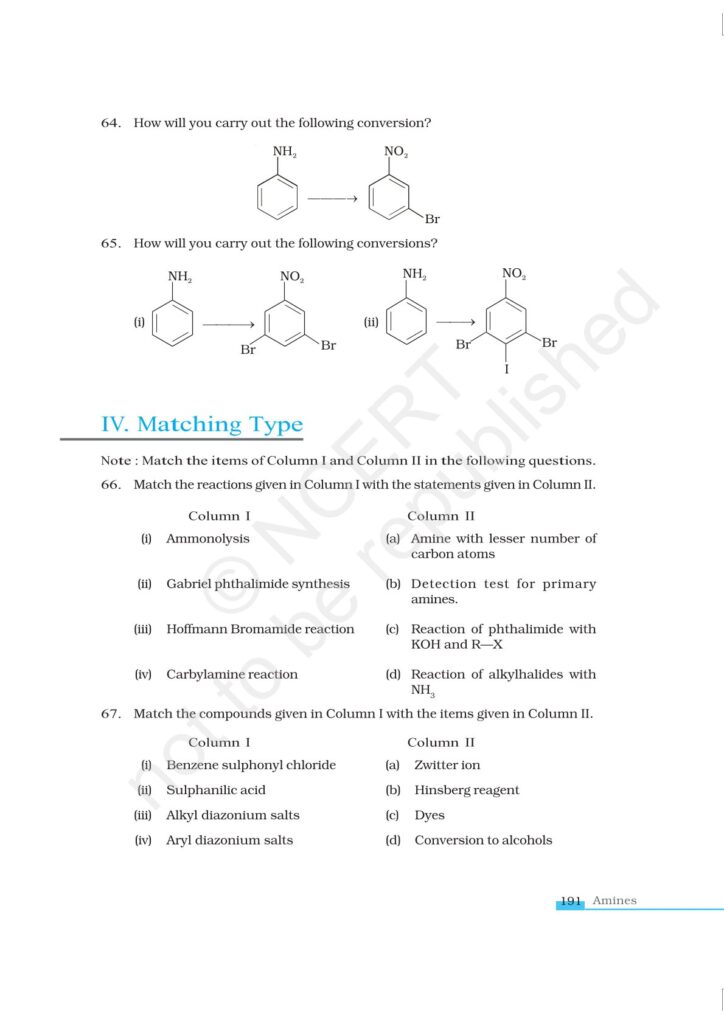
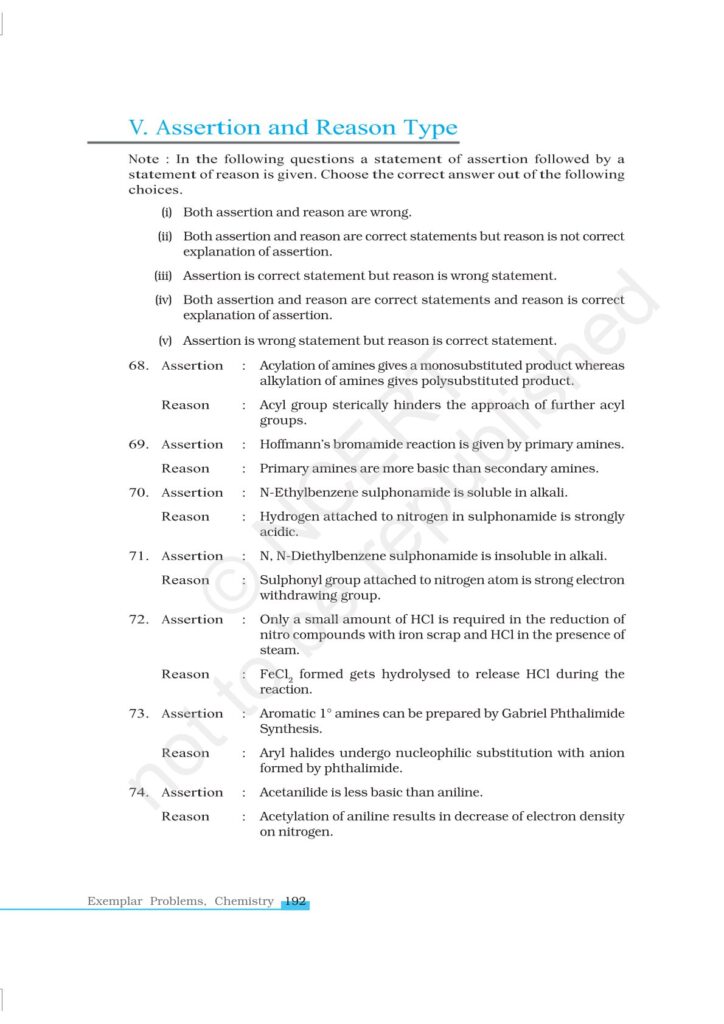
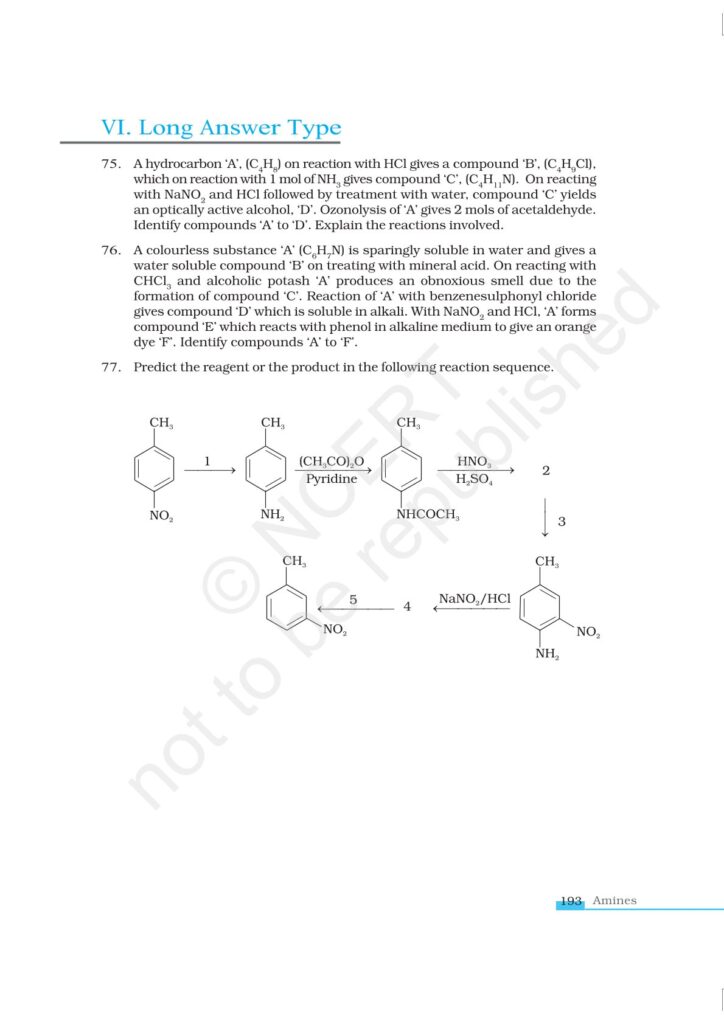
- ✅ Assertion-reason type questions, match-the-columns, and long answer questions are addressed with logic and structured reasoning, which is essential for exams like JEE, NEET, and CUET.
🧪 Real-Life Relevance of This Chapter
- Amines form the base of several medicinal compounds like antihistamines, antidepressants, and antibiotics.
- Diazonium salts are used in the production of azo dyes which are widely used in the textile industry.
- Nitro compounds like TNT are central to explosives, while nitriles are key intermediates in organic synthesis.
Thus, this chapter not only hones academic skills but also links chemistry to industries and day-to-day life.
📘 What You’ll Gain from These NCERT Solutions
- In-depth understanding of each concept with step-by-step derivations and mechanisms
- Confidence in solving complex problems and writing structured answers
- Enhanced conceptual clarity, ensuring that you not only memorize but understand the chemistry of nitrogen-containing compounds