


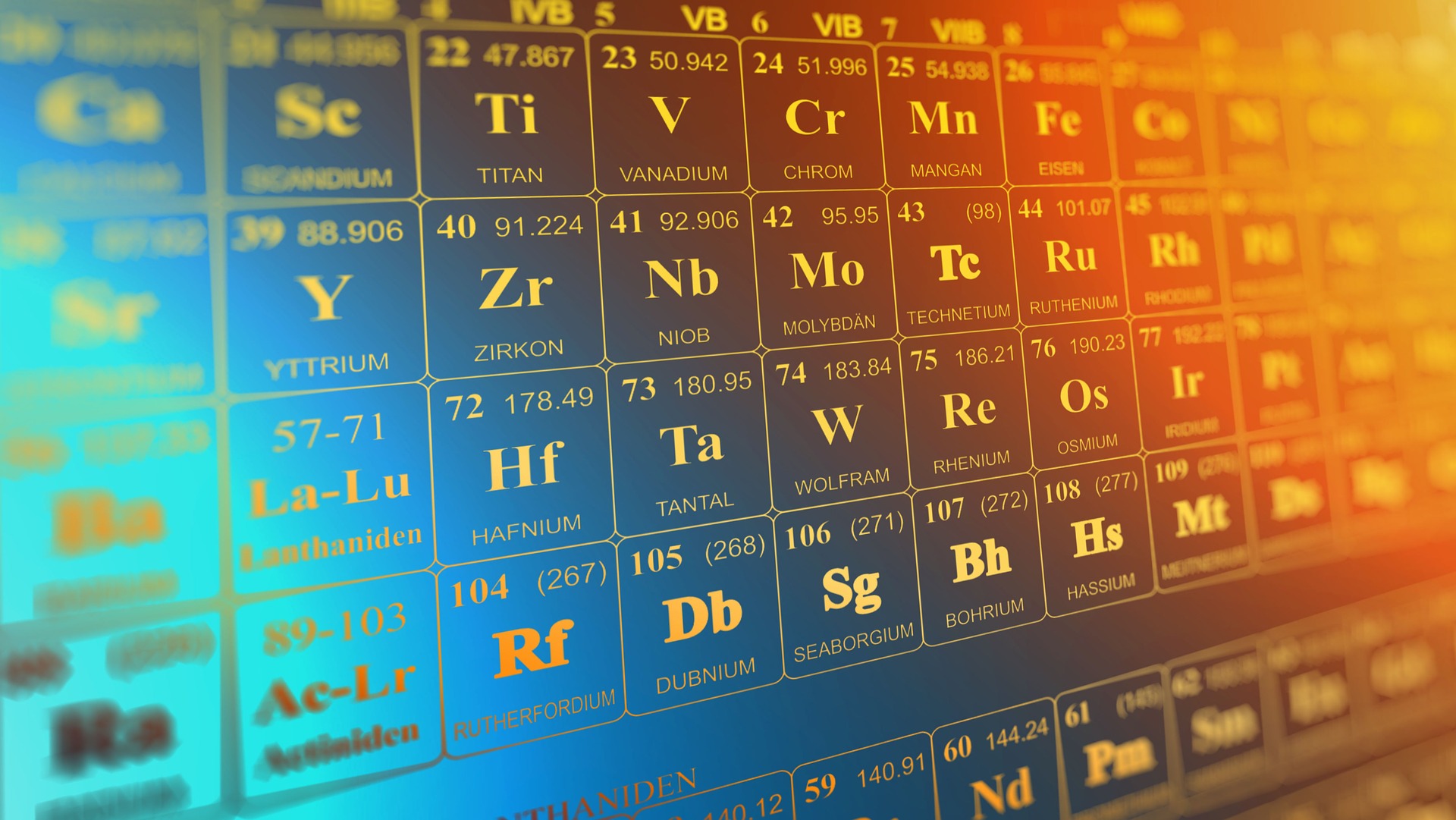
1. The Need for Classification 🧐
The Periodic Table is a fundamental tool in chemistry that organizes all known elements. Early chemists faced the challenge of organizing the growing number of elements and understanding the relationships between their properties. This led to several attempts at classification.
- Dobereiner’s Triads: An early attempt where elements with similar properties were grouped in threes (triads). The atomic mass of the middle element was approximately the average of the other two.
- Newlands’ Law of Octaves: He arranged elements in increasing order of atomic mass, noting that every eighth element had properties similar to the first, much like musical notes.
- Mendeleev’s Periodic Law: Dmitri Mendeleev proposed that the properties of elements are a periodic function of their atomic masses. He arranged elements into a table with groups and periods, leaving gaps for undiscovered elements and successfully predicting their properties.
2. The Modern Periodic Table ⚛️
The modern periodic table is based on Moseley’s Periodic Law, which states that the properties of elements are a periodic function of their atomic numbers. The atomic number is a more fundamental property than atomic mass.
- Groups: There are 18 vertical columns. Elements in the same group have the same number of valence electrons (electrons in the outermost shell) and therefore exhibit similar chemical properties.
- Periods: There are 7 horizontal rows. Elements in the same period have the same number of electron shells.
3. Periodic Properties and Trends
Periodic properties are the properties of elements that show a regular, predictable trend across a period and down a group. The main reason for these trends is the change in the number of electron shells and the effective nuclear charge.
- Atomic Size (Atomic Radius): This is the distance from the center of the nucleus to the outermost electron shell.
- Across a period (left to right): Atomic size decreases. This is because as the atomic number increases, the nuclear charge increases, pulling the electrons closer to the nucleus.
- Down a group (top to bottom): Atomic size increases. A new electron shell is added for each successive element, which increases the distance of the valence electrons from the nucleus.
- Metallic and Non-metallic Character:
- Metallic character is the tendency of an element to lose electrons and form a positive ion.
- Across a period: It decreases as the nuclear pull makes it harder to lose electrons.
- Down a group: It increases as the valence electron is further away and easier to remove.
- Non-metallic character is the tendency to gain electrons and form a negative ion. It shows the opposite trend.
- Across a period: It increases.
- Down a group: It decreases.
- Metallic character is the tendency of an element to lose electrons and form a positive ion.
- Ionization Potential (or Ionization Energy): The energy required to remove an electron from a neutral, gaseous atom.
- Across a period: It increases. Stronger nuclear pull holds electrons more tightly, requiring more energy to remove them.
- Down a group: It decreases. The valence electron is farther away and shielded by inner shells, making it easier to remove.
- Electron Affinity: The energy released when an electron is added to a neutral, gaseous atom.
- Across a period: It generally increases. The increasing nuclear charge makes the atom more attractive to an extra electron.
- Down a group: It decreases. The increasing atomic size and shielding effect reduce the attraction for an incoming electron.
- Electronegativity: The tendency of an atom to attract a shared pair of electrons towards itself in a chemical bond.
- Across a period: It increases. The nucleus has a stronger pull on the shared electrons.
- Down a group: It decreases. The increased atomic size and shielding weaken the pull on the shared electrons.


