🔥 Introduction to Thermodynamics – Class 11 Chemistry
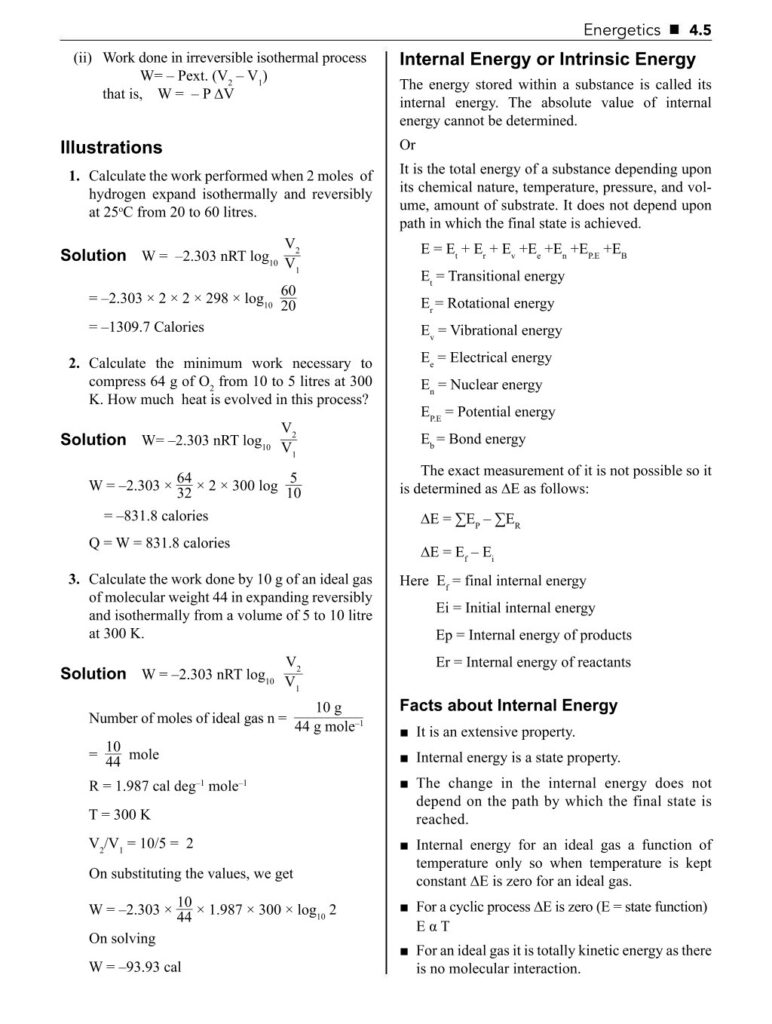
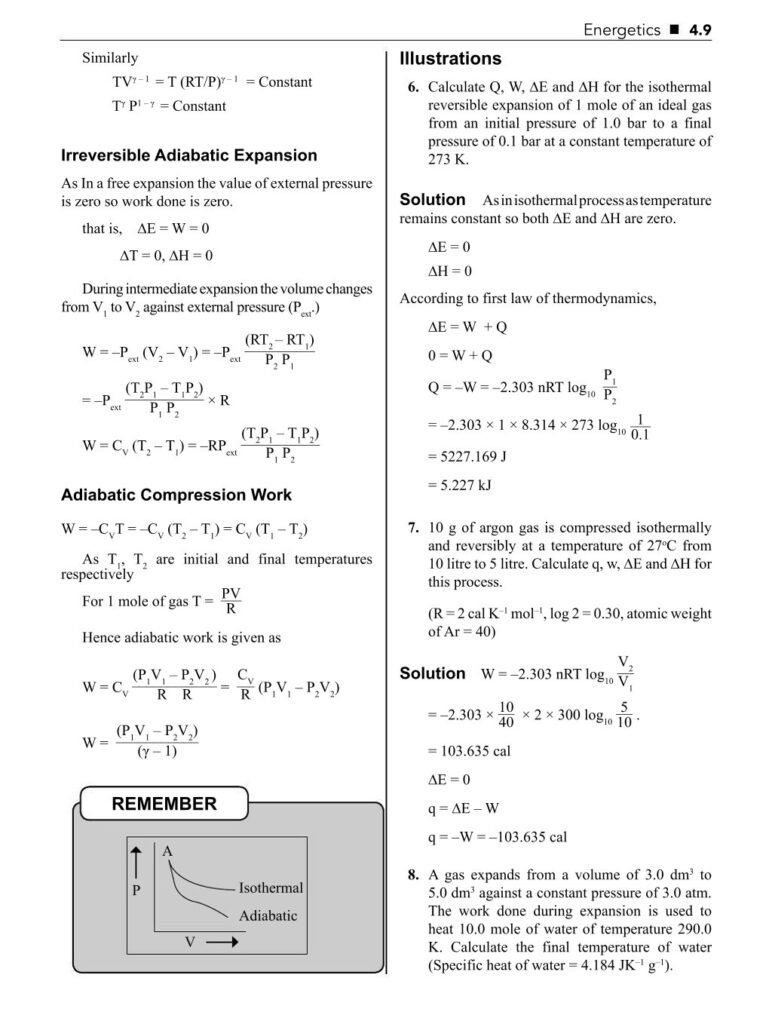
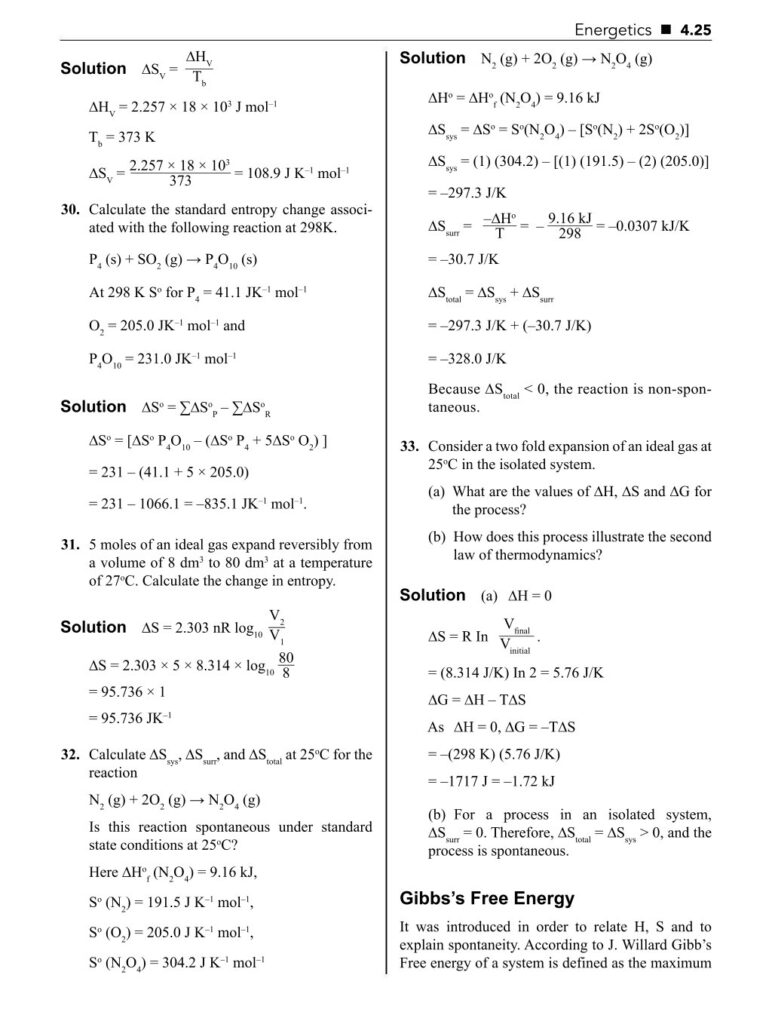
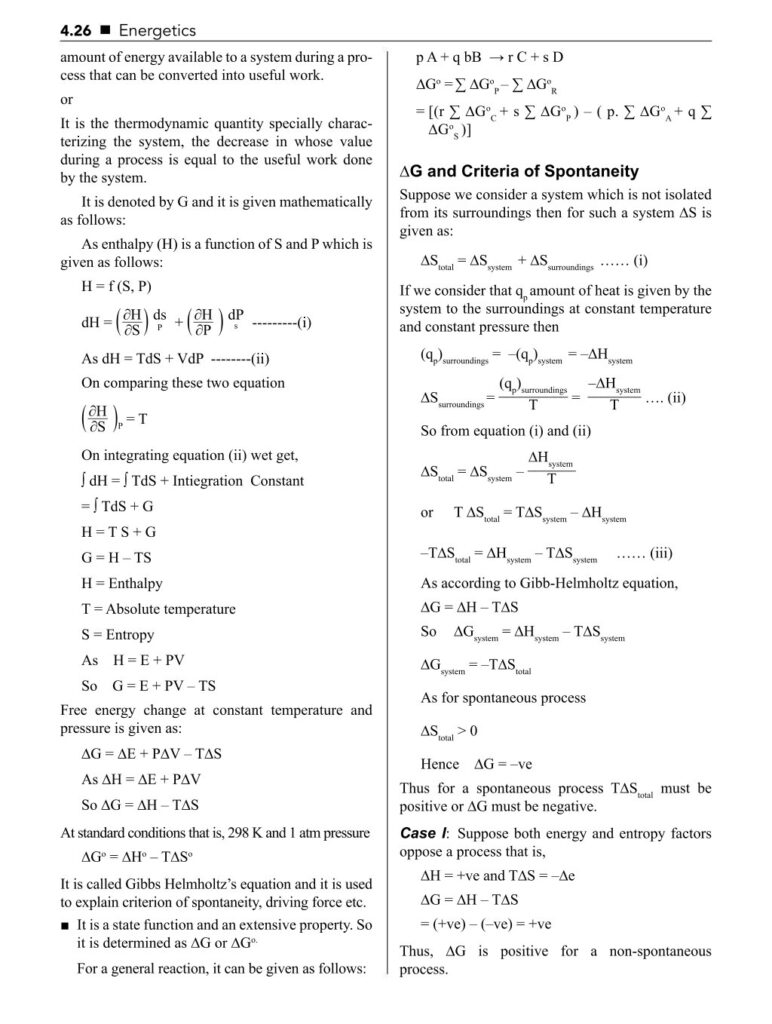
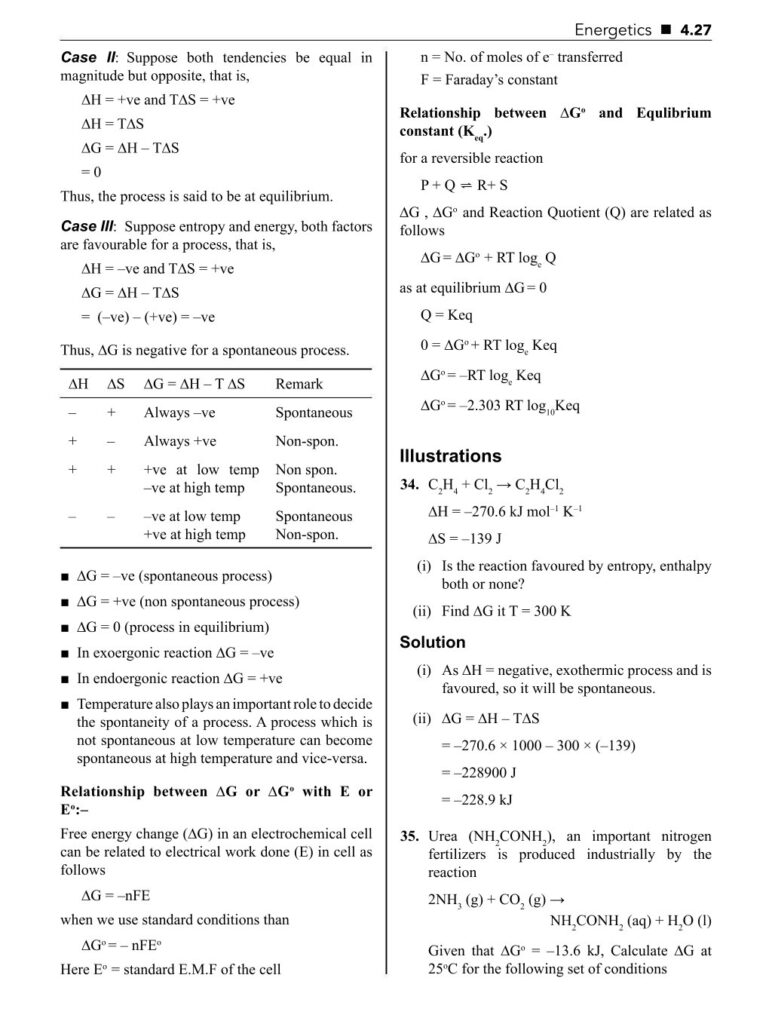
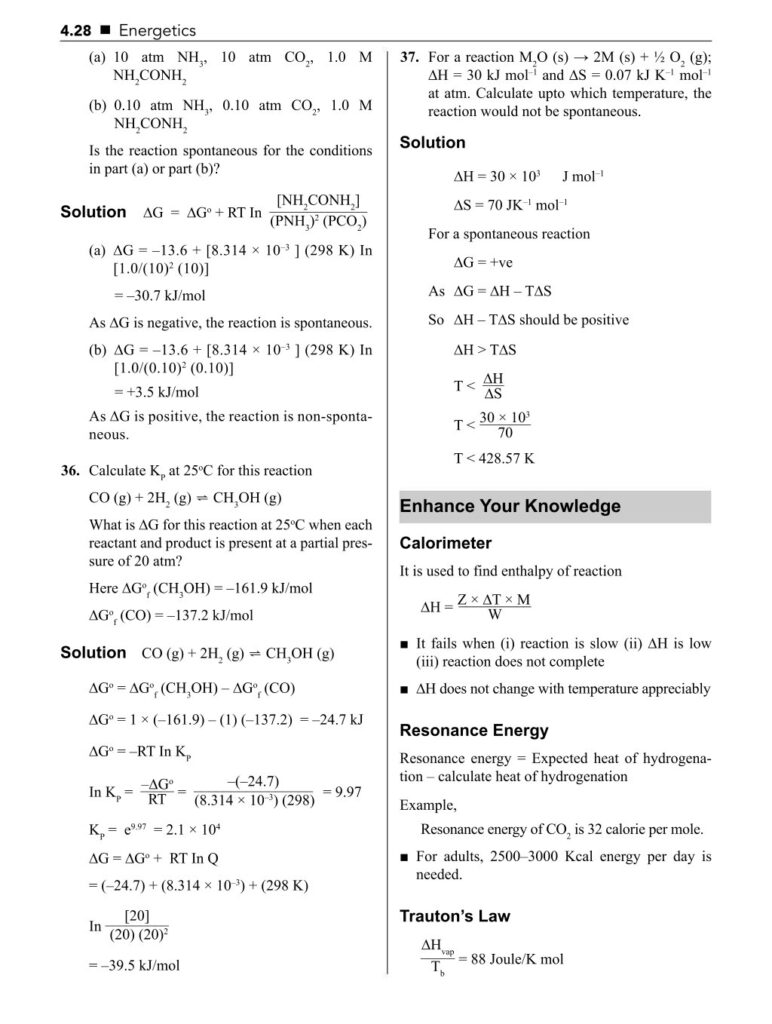
Thermodynamics is one of the most foundational and intellectually stimulating chapters in Class 11 Chemistry. Rooted deeply in both chemistry and physics, this branch of science deals with the study of energy transformations, especially the conversion of heat into other forms of energy and vice versa, during physical and chemical changes.
The word “thermodynamics” originates from two Greek words: “therme” meaning heat and “dynamis” meaning power. True to its name, thermodynamics enables us to understand how energy flows within a system and how it governs the feasibility and extent of physical processes and chemical reactions.
Unlike kinetics, which focuses on the rate at which a reaction proceeds, thermodynamics answers a more fundamental question:
👉 Will a reaction occur at all under given conditions?
It is this predictive power that makes thermodynamics an indispensable part of chemical science.
🌍 Scope of Thermodynamics
In this chapter, you will not only learn about the flow of heat and energy conservation, but also explore how internal energy, work, and enthalpy are defined and interrelated. It provides the essential tools to:
- Understand why some reactions are spontaneous while others are not.
- Predict energy changes in chemical reactions.
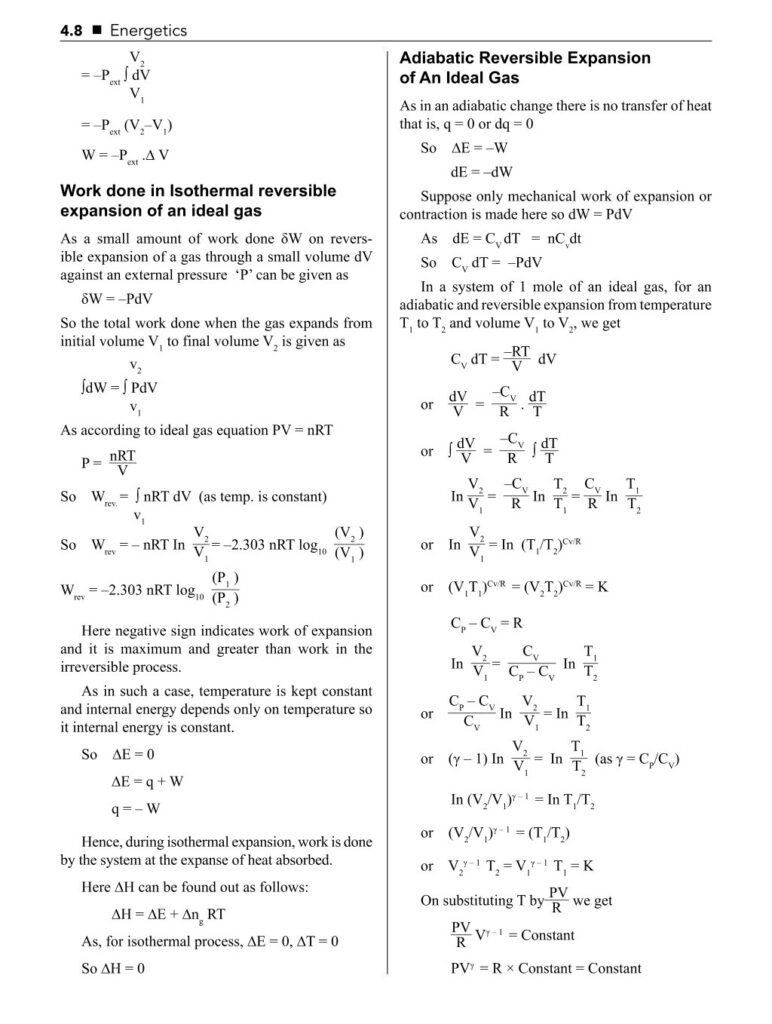
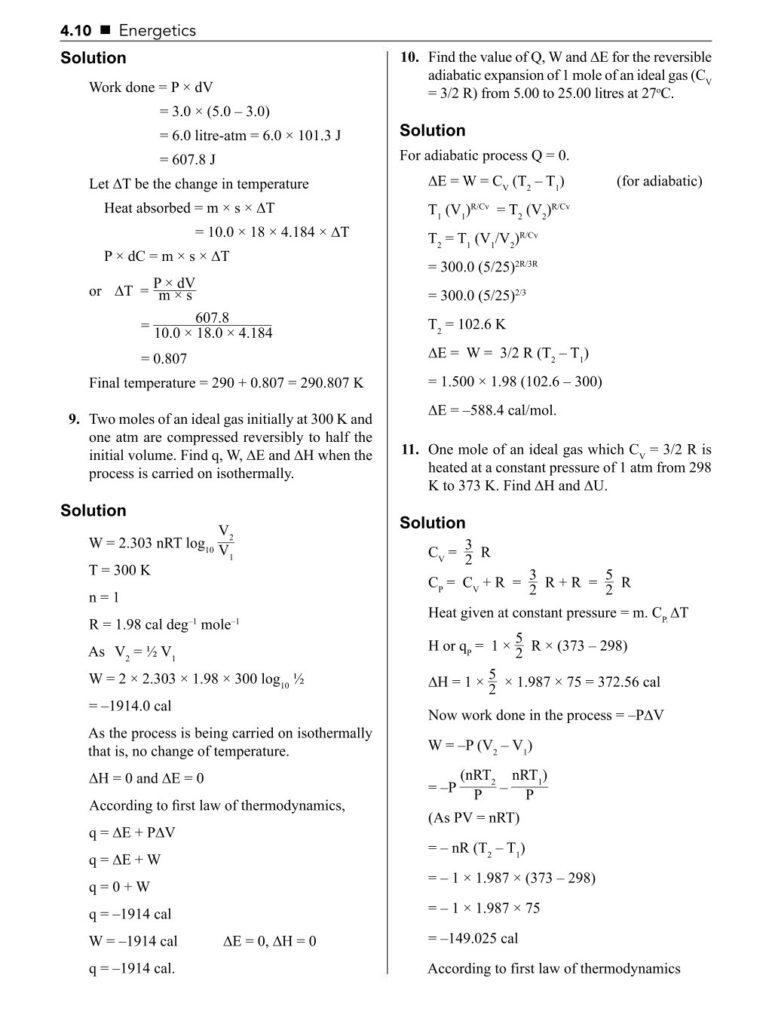
- Analyze work done during expansion or compression of gases.
- Explore concepts like heat capacity, enthalpy of reactions, and internal energy.
Thermodynamics applies universally—from the functioning of steam engines and refrigerators to biological metabolism and atmospheric processes. It forms the basis for designing engines, turbines, power plants, chemical reactors, batteries, and even life-saving pharmaceutical processes.
🧪 Relevance in Chemistry
In chemistry, thermodynamics helps answer:
- Why does water boil at 100°C under normal pressure?
- Why do endothermic reactions still occur?
- Why does mixing two substances sometimes release heat?
- How do living organisms maintain order while obeying the laws of energy?
By studying this chapter, students build a logical and quantitative understanding of energy and heat, both of which are critical to mastering physical chemistry.
⚙️ What You Will Learn
The chapter walks you through:
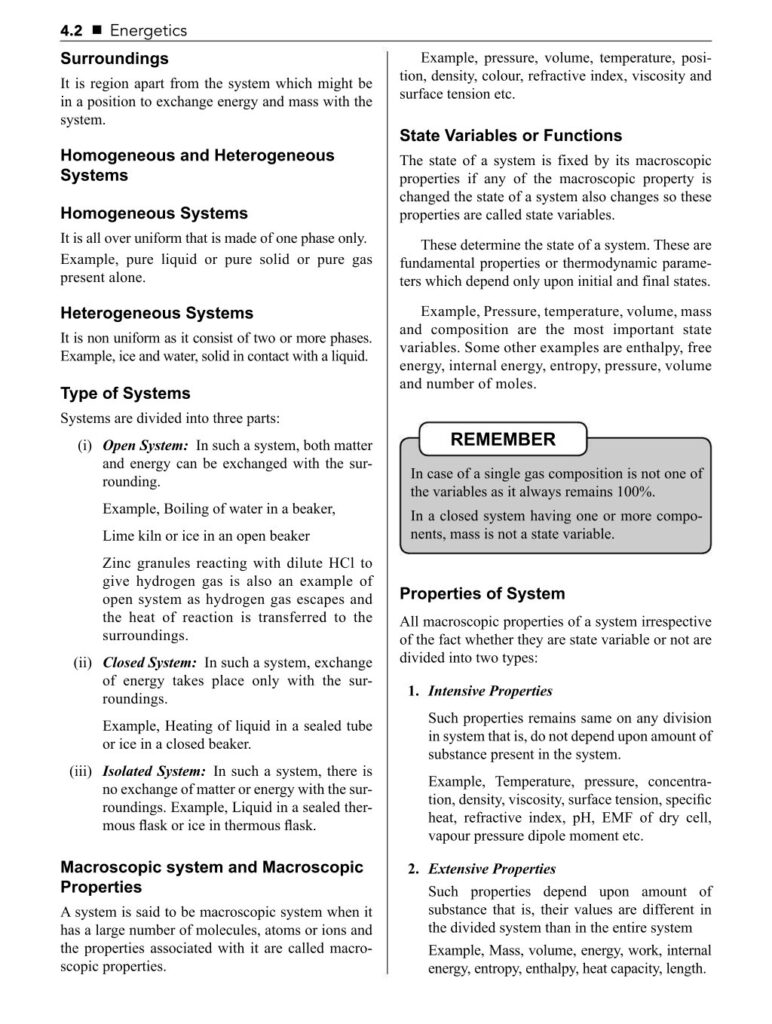
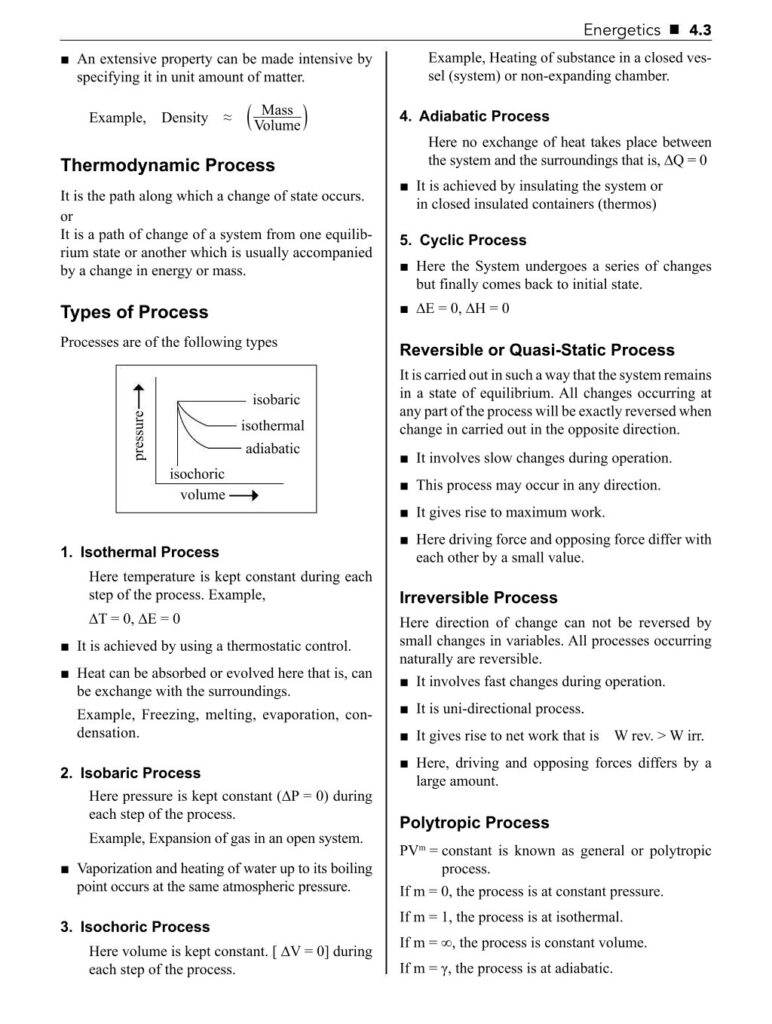
- Key terms like system, surroundings, state functions, and thermodynamic processes.
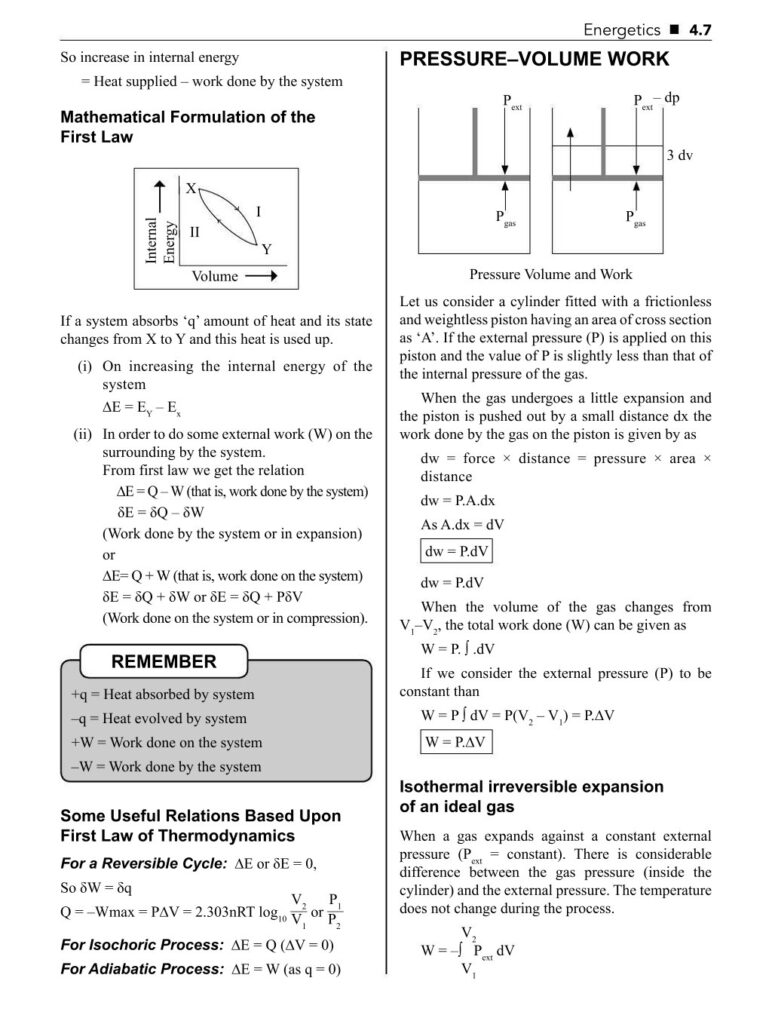
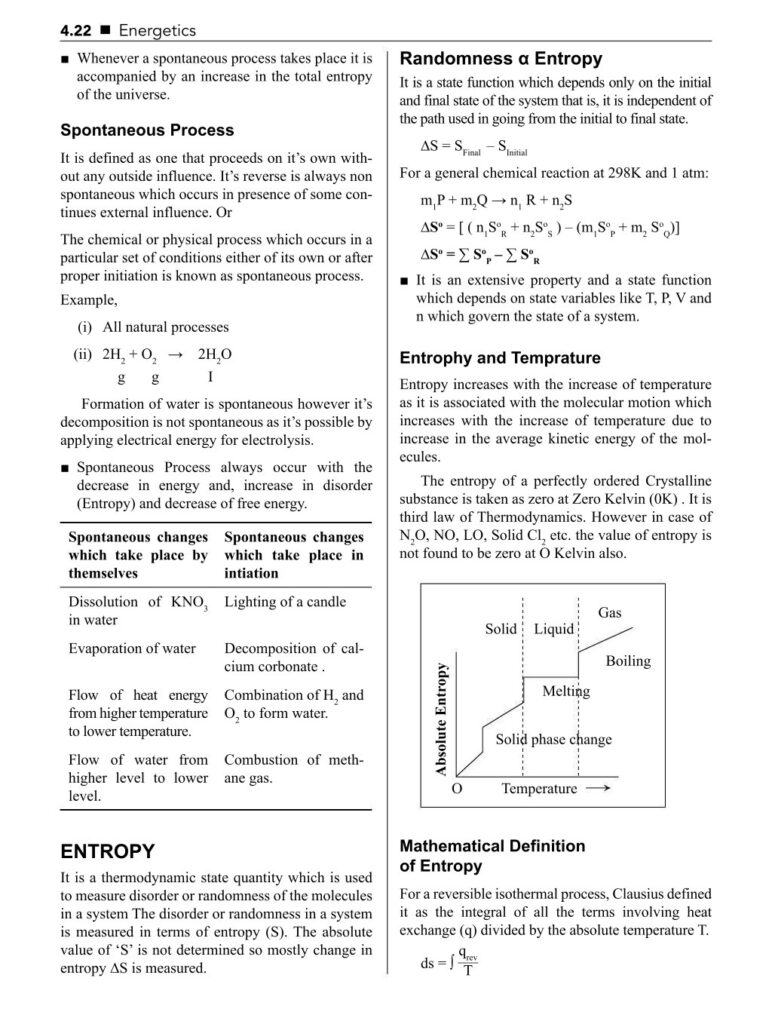
- The First Law of Thermodynamics (law of conservation of energy).
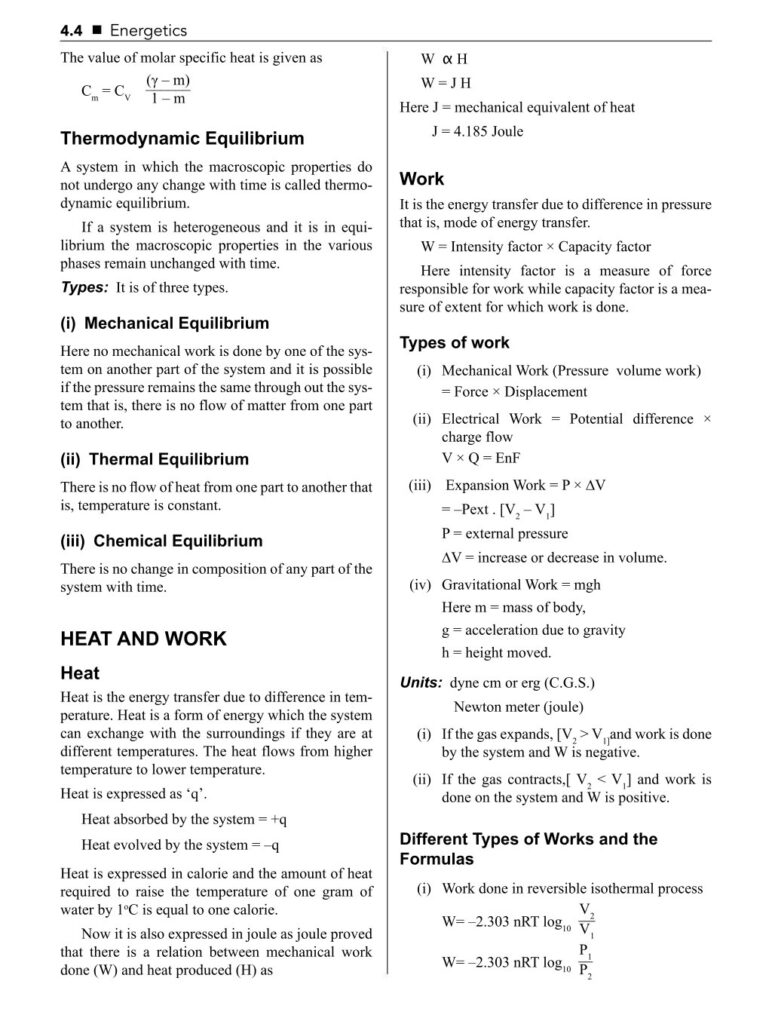
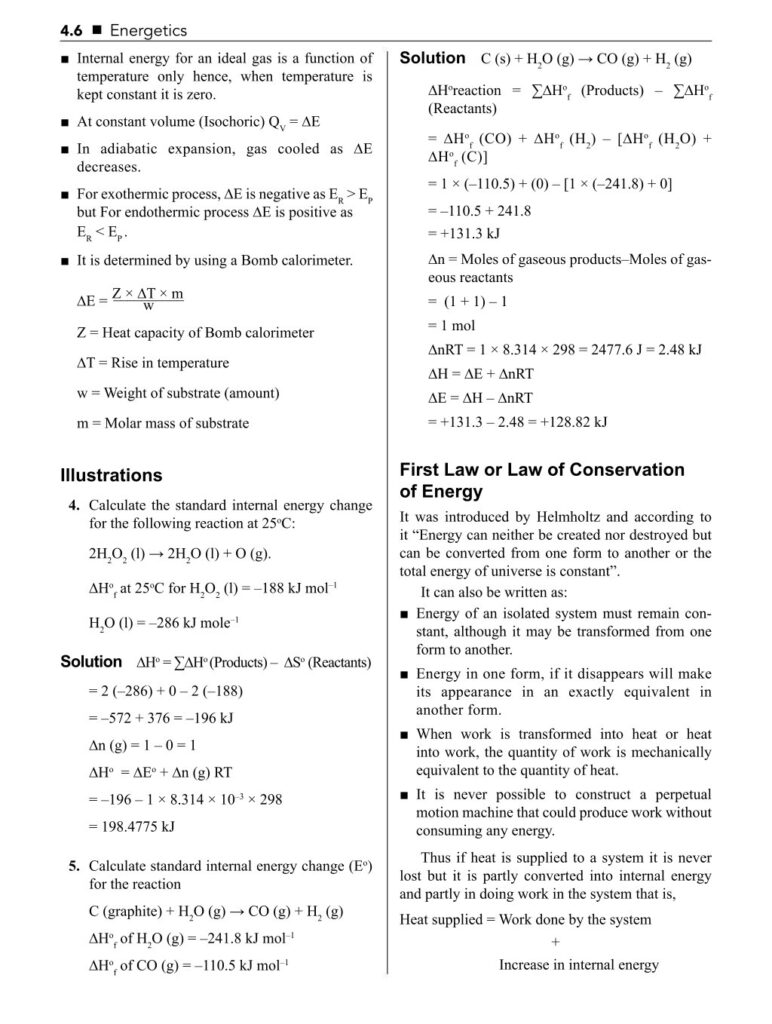
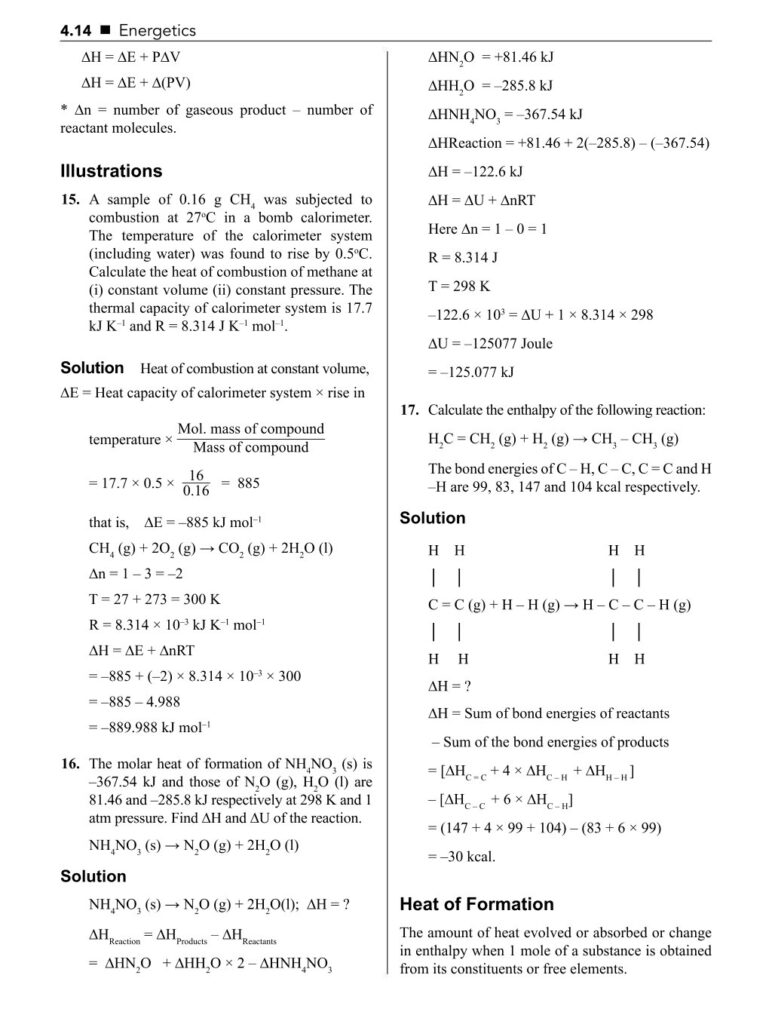
- Internal energy changes (ΔU), heat (q), and work (W) in chemical and physical processes.
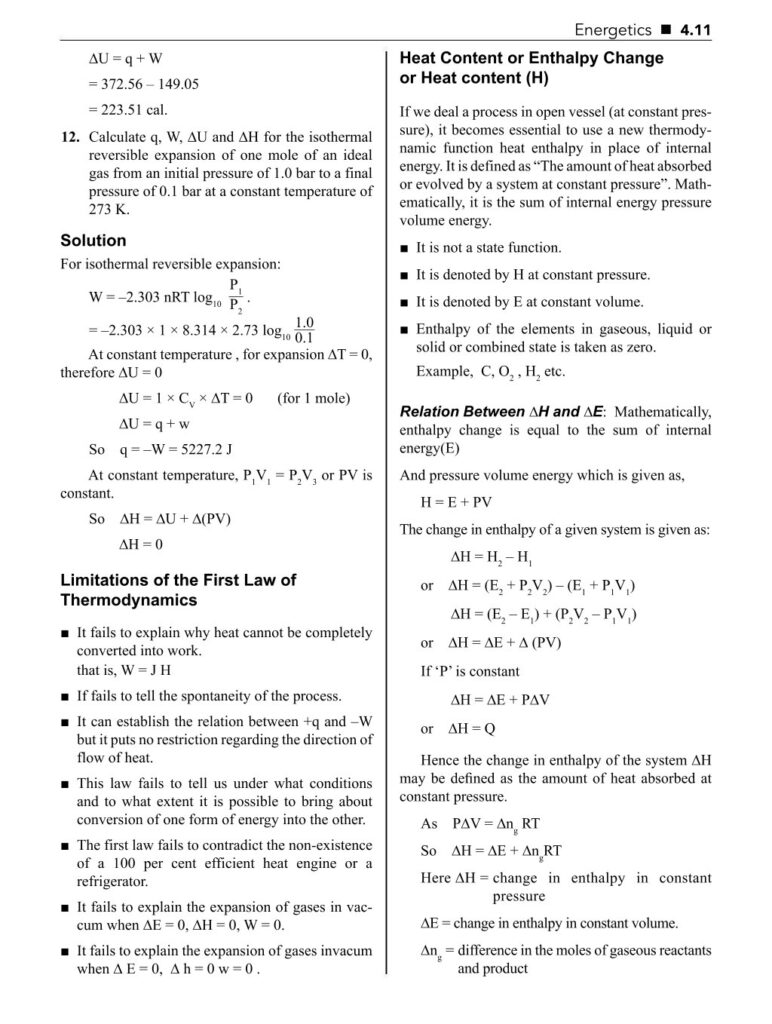
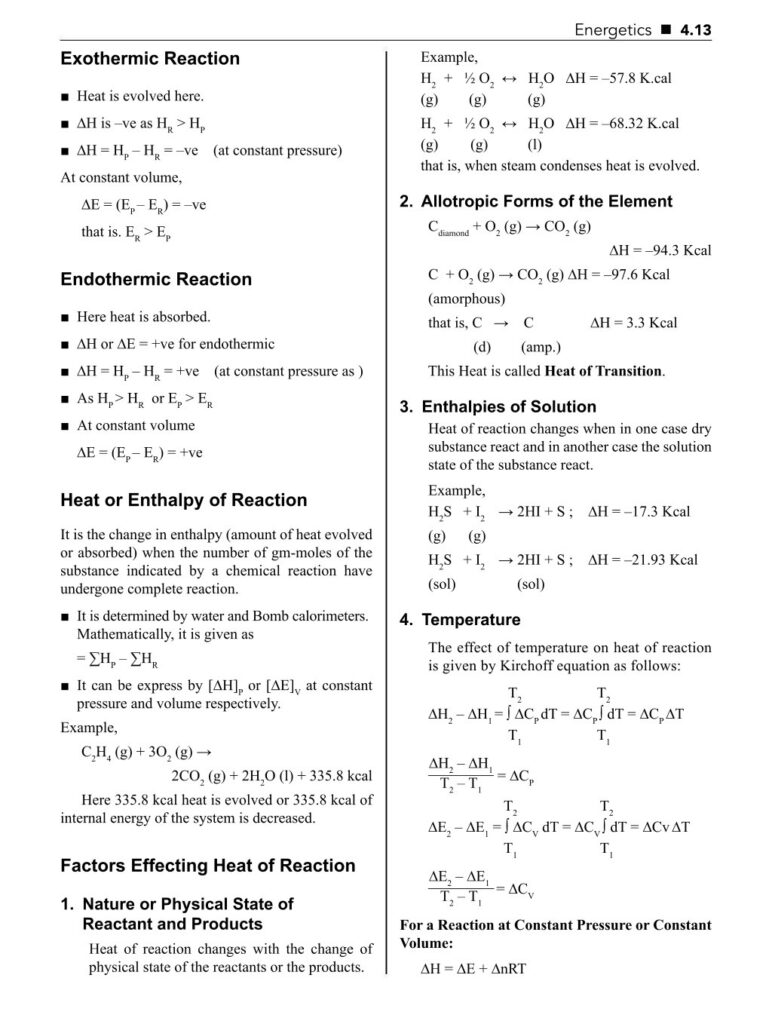
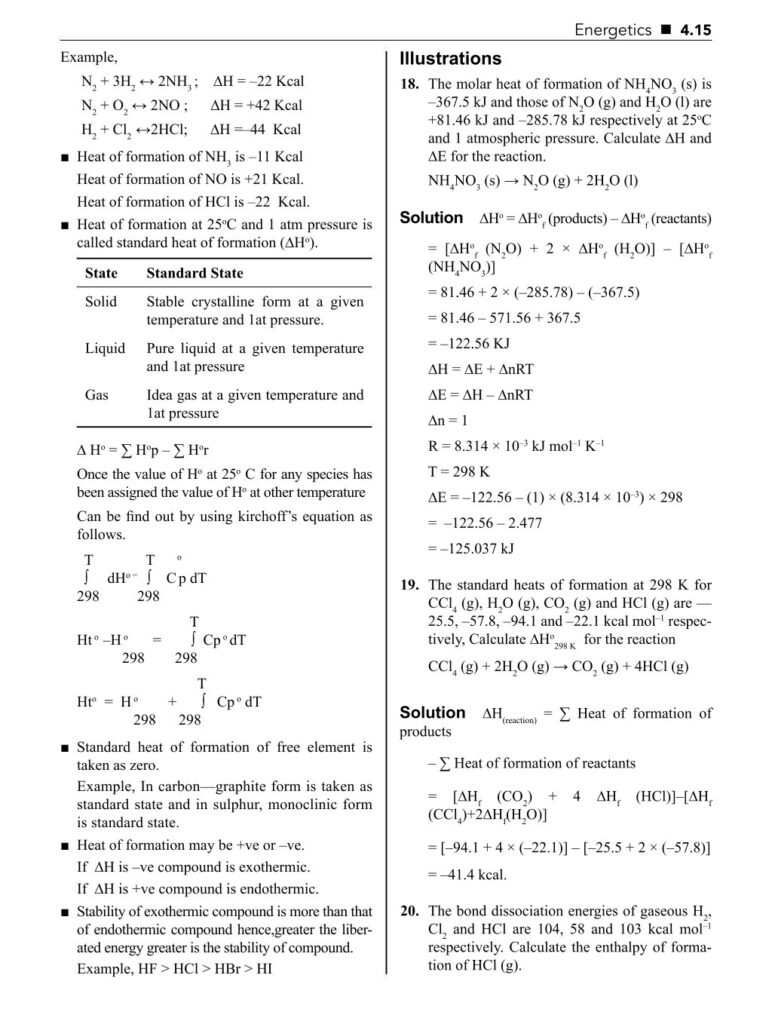
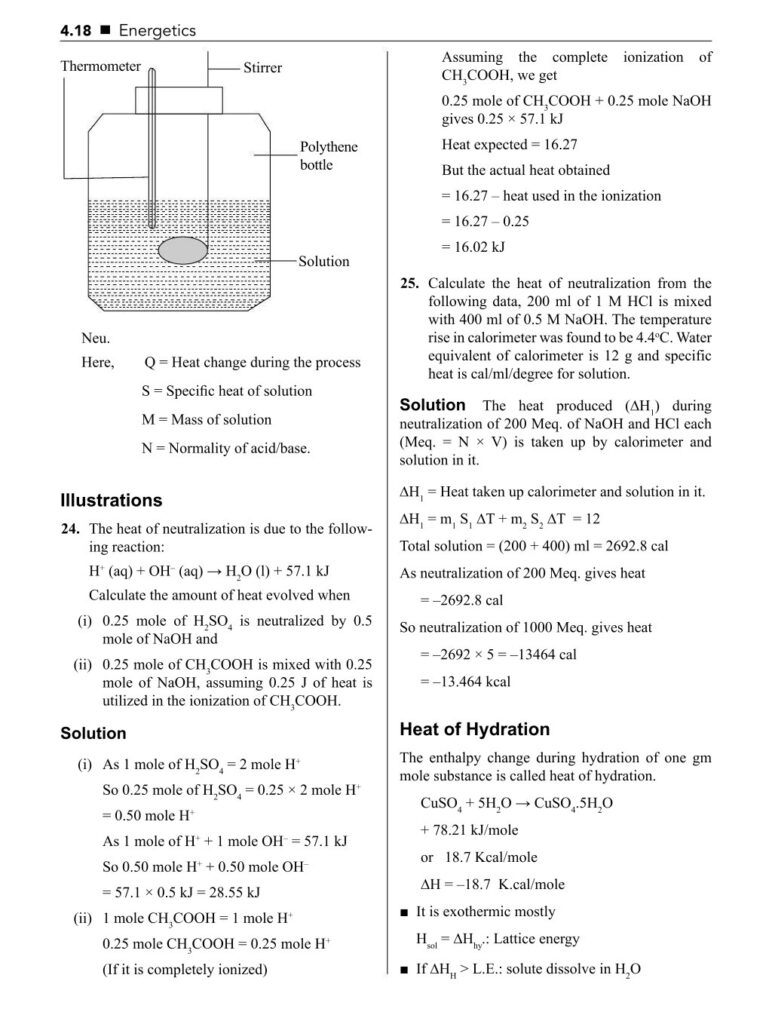
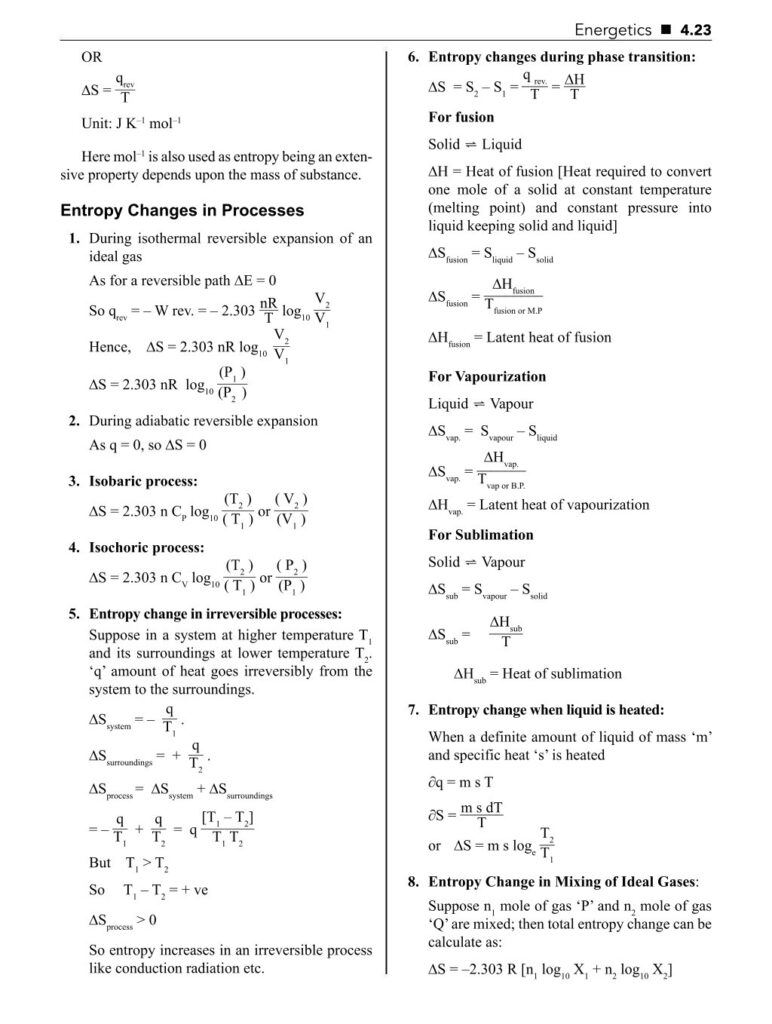
- Enthalpy (ΔH) and its role in determining whether a reaction is exothermic or endothermic.
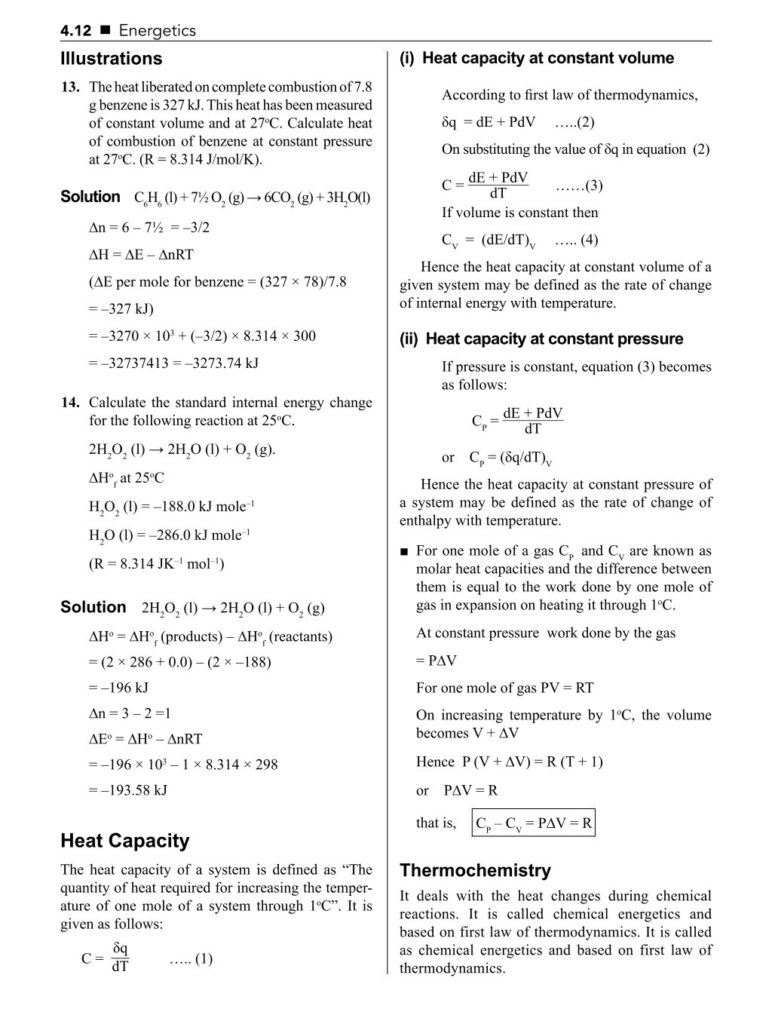
- The concept of heat capacity, specific heat, and calorimetry.
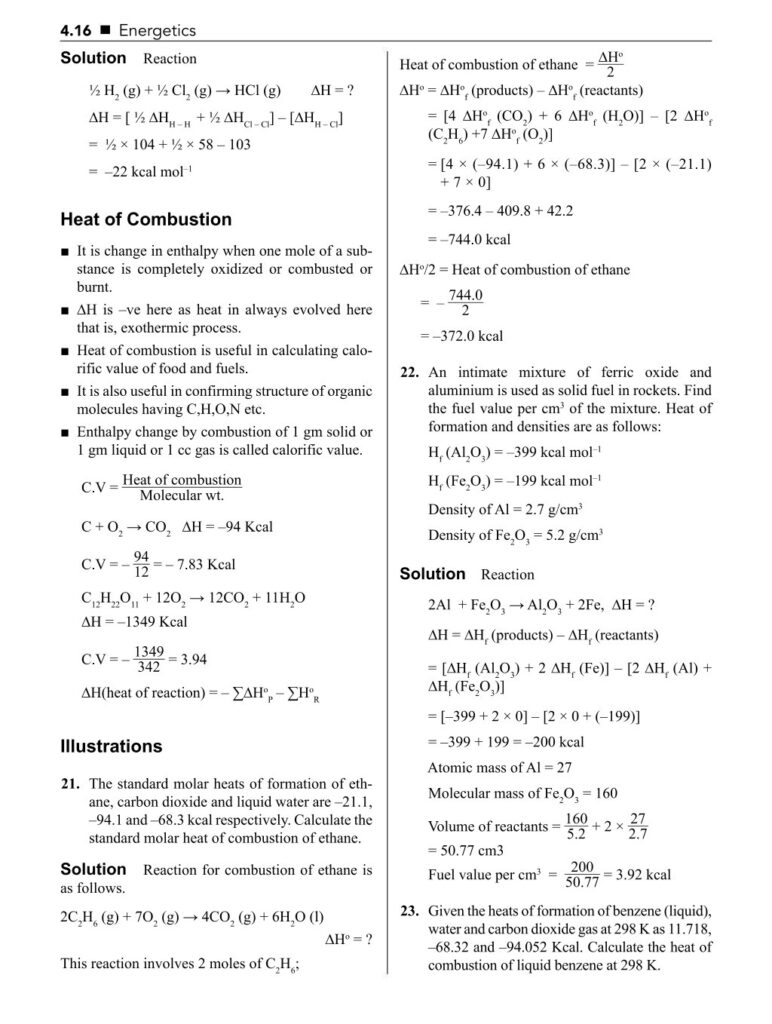
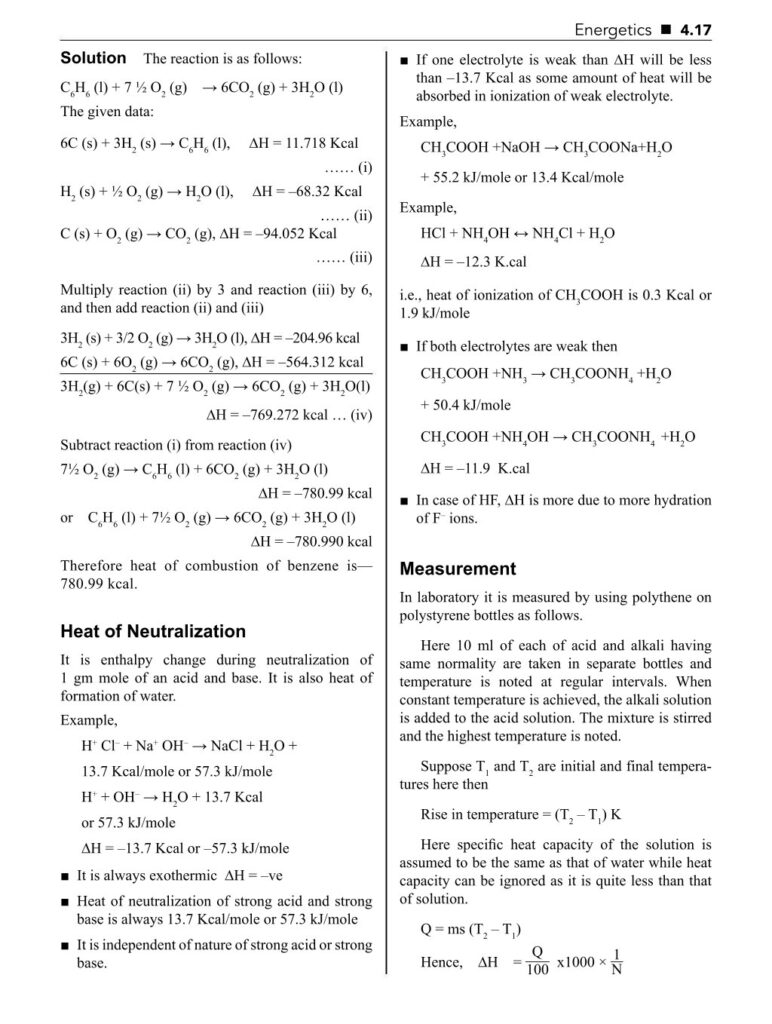
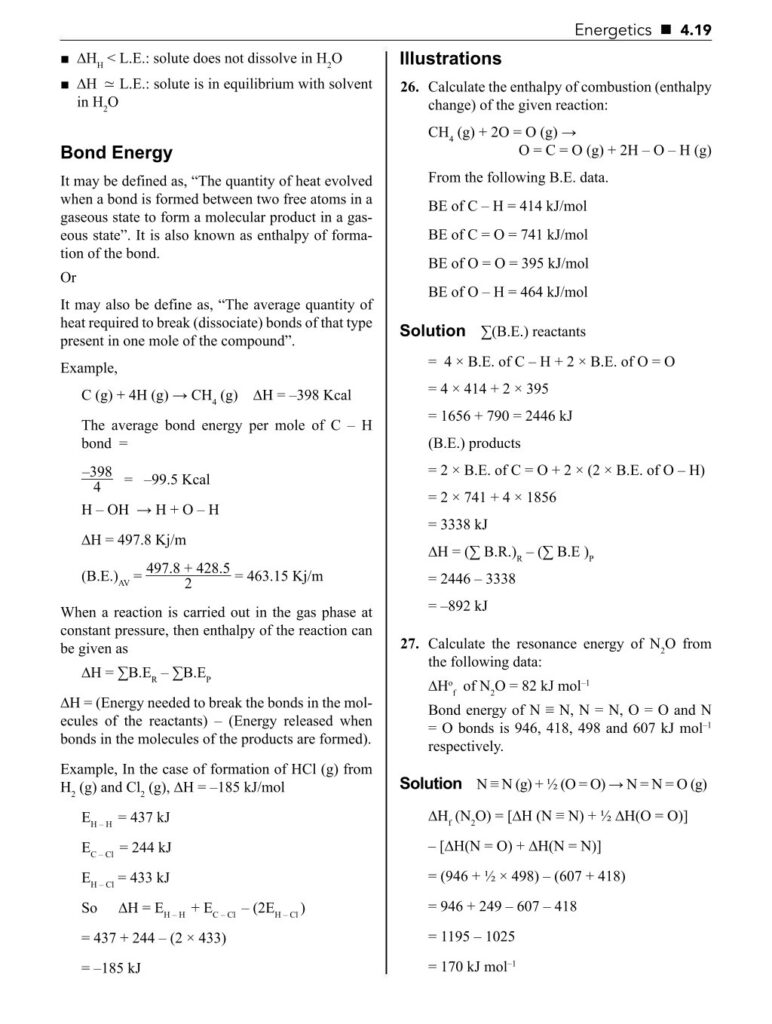
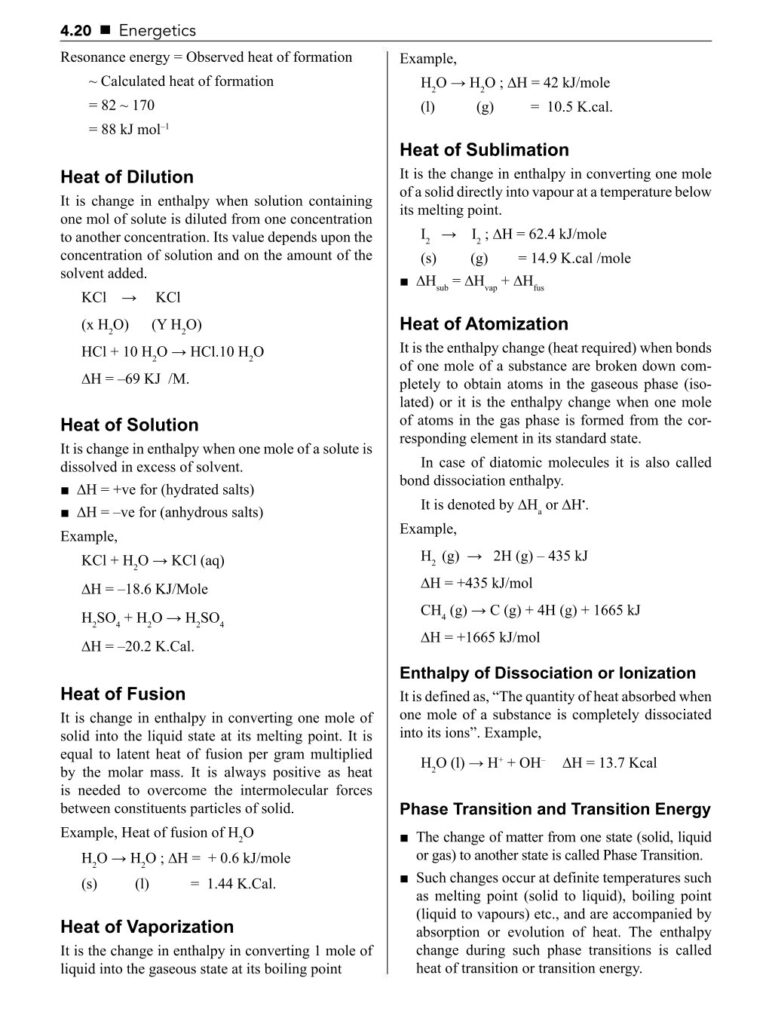
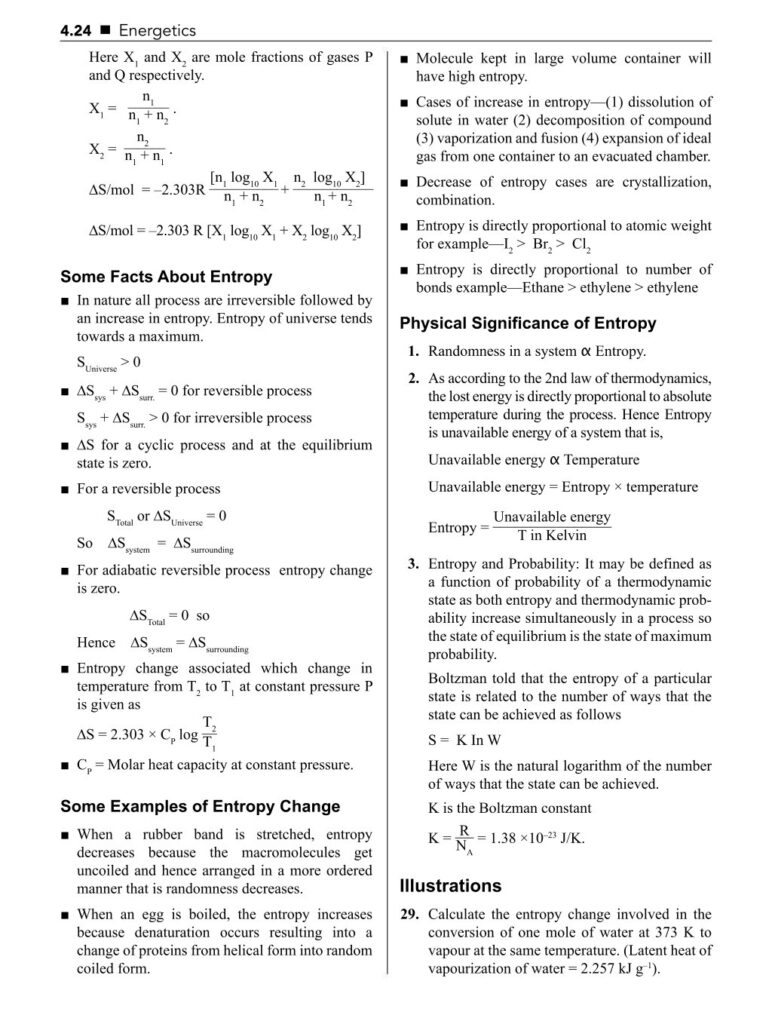
- Enthalpy changes for different types of reactions: combustion, fusion, vaporization, and formation.
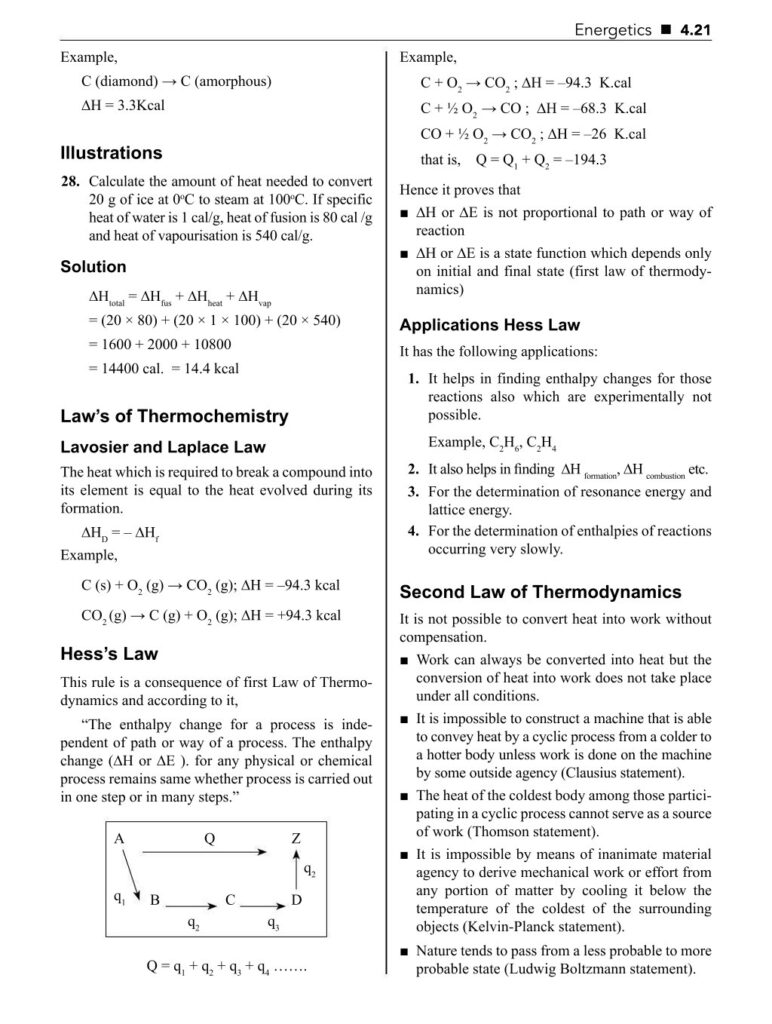
- An introduction to Hess’s Law, which allows us to calculate enthalpy changes indirectly.
🎯 Why It Matters
Mastering thermodynamics lays the groundwork for future topics like:
- Chemical equilibrium
- Electrochemistry
- Thermochemistry
- Gibbs free energy and spontaneity (in Class 12)
This chapter develops analytical thinking, problem-solving skills, and a deep appreciation of energy transformations, making it essential for students aiming for competitive exams such as JEE, NEET, and Olympiads.